About sound film
Sound film consists in the synchronization or introduction of technological sound into films. It incorporates within the film, the correct synchronization of the images with the sound.
Characteristics of sound film
Among the most outstanding characteristics of sound films we mention:
- In the early years after the introduction of sound, films that incorporated synchronized dialogue were known as “spoken images” or “spoken movies.
- It condemned silent films to remain in the past.
- With it, the figures of the musical director and the composer
- The actor had to speak into the microphones at the beginning.
- It eliminated many of the famous silent actors.
- It was more profitable.
Origin
Sound film originated in the kinetoscope, a device created by Edison, which, after a series of experiments could combine images with the phonograph, also invented by him, in this way sound film was born. The first existing kinetoscope classroom was inaugurated in Broadway, New York.
History of sound film
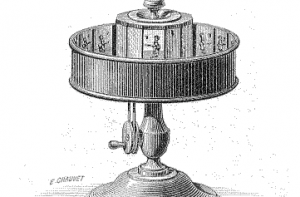
The idea of combining moving images with recorded sound is as old as cinema. On February 27, 1888, Eadweard Muybridge and Thomas Edison, both inventors met. Muybridge proposed a plan for sound film that would combine his zoopraxiscope of image casting with Edison’s recorded sound technology. Although they failed to reach an agreement, Edison commissioned the development of the Kinetoscope, essentially a peep-show system, as a visual complement to his cylinder phonograph.
In 1899, a projected sound film system known as movie macrophotograph or Phonogram was exhibited in Paris, based mainly on the work of the inventor François Dussaud; the system required the individual use of headphones. Phérom-Cinema-Théâtre, an improved cylinder-based system was developed by Clément-Maurice Gratioulet and Henri Lioret of France, allowing the presentation of short theatre films, opera and ballet extracts at the 1900 Paris Exhibition. These seem to be the first publicly exhibited films with recorded image and sound projection.
In 1907, Eugene Lauste, born in France and resident in London, who had worked in Edison’s laboratory between 1886 and 1892, received the first sound technology patent on film, which involved changing sound into light waves that were recorded photographically directly on celluloid.
Although sound on film would become the universal standard for synchronized sound cinema, Lauste never exploited his innovations successfully. In 1913, Edison introduced a new sound device, instead of films that were shown to individual viewers being projected onto a screen. The phonograph was connected by an intricate arrangement of pulleys to the film projector, allowing, under ideal conditions, synchronization. In 1914, Finnish inventor Eric Tigerstedt received the German patent for his sound work on the film.
Who invented it?
Lee De Forest is considered the true inventor of sound film in 1922.
Importance
Its main importance is because with the sonorous cinema the creation was also given, changing the conception of the expressivity and communication. In sound films, the use of soundtracks within the film and the acoustic environment was intensified. In addition, through sound film, the work for actors was expanded, becoming one of the most lucrative activities in the industry.
What was the first movie of sound film?
The first known public screening of screened sound films took place in 1900 in Paris, but it took many, many years before synchronization became commercially practical. The first commercial screening of films with fully synchronized sound took place in New York City in April 1923. The first film originally presented as a soundtrack was The Jazz Singer, which was released in October 1927.
Other featured films
- The Great Dictator with Charles Chaplin: that was the surrender of Charles Chaplin to the hegemony of sound. The film was a strong critique of the German National Socialist Party, fascism and anti-Semitism, at a time when the United States had not yet entered the war.
- Singing in the Rain with Stanley Donnen, Gene Kelly: was a musical inspired by the Broadway Classical Melodies.
- Casablanca, Oliver Twins, Citizen Kane, Star Wars, The Chess Player, and many more.
Featured actors
Some of the most prominent actors in sound cinema are:
- Lon Chaney, the man with a thousand faces.
- Rodolfo Valentino, who was one of the greatest sexual symbols that cinema has created.
- Max Linder, who was one of the great comedians before the First World War.
- Jim Carrey, Robin William, Johnny Depp, Harrison Ford, Will Smith, Robert de Niro.
Featured actresses
- Barbara La Marr, who began her career as a screenwriter, before becoming an excellent actress.
- Mabel Normand was a star discovered by Mack Sennett.
- Angelina Jolie, Meg Ryan, Sharon Stone, Kim Basinger, Michelle Pfeifer.
Curiosities of sound film
- At the beginning of the sound film, microphones were placed hidden throughout the set and as close as possible to the actors, which sometimes caused many setbacks.
- It was very difficult for the actors to adapt to the sound.
- The scream Wilhelm was used for the first time in distant drums. This scream was used when being attacked by a crocodile, to flee in terror or to attack a castle with violence.
- Since the sound effect called “castle thunder” was created for Dr. Frankenstein using a hammer and a metal plate, this effect has always been the same film after film.