Surrealism
All periods of art history have lived their own form of expression, each of them with a large number of expressive forms that has given rise to the birth of artistic movements. These movements are not determined solely by social or historical conditions, but are conditioned by the aesthetic, formal, conceptual, generic and thematic characteristics of the productions that determine them. This is the case of surrealism, a literary and artistic movement, dedicated to expressing the imagination as it is revealed in dreams, a free thought that does not have a conscious control of reason. Surrealism inherited its anti-rationalist sensibility from Dada, but it was lighter in spirit and was shaped by emerging theories about the perception of reality, the most obvious influence being Freud's subconscious model.
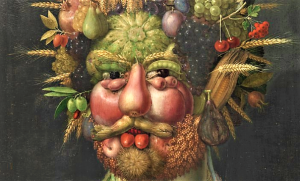
What is surrealism?
It's an art and literary movement that was born in France and originated from Dadaism. It was a movement that sought to discover a truth through images that expressed their emotions with logical reasoning.
About surrealism
Surrealism was a literary and artistic movement consisting of the spontaneous and automatic expression of thought, which was only regulated by the impulses of the subconscious and paid no attention or importance to logic or the negation of previously established moral and social norms.
It proposed that fantasy, madness, and the use of automatic reaction should be valued. For this artistic movement, the artist had to let himself be carried away by impulse, writing down all the ideas and thoughts he had in his mind, leaving logic aside.
It was a combination of representative, abstract, unreal and unconscious thought. It also consisted in the liberation of logic and the use of reason, it was to go a little beyond that consciousness that was practiced day by day to express in this way the unconscious and the dreams and looked for how to express in an irrational way the hidden truths.
Characteristics
The main characteristics of this movement were as follows:
- It was born as a literary movement, but it was introduced in sculpture, cinema and painting.
- Everything that goes beyond logic and the unconscious is admitted.
- The artists consider that truth is hidden behind the real world.
- It admits everything related to dreams, myths and visions.
- Three of the most important aspects were automatism, psychoanalysis and witchcraft.
- They consider that social protocols restrict
- It represented the unconscious, dreams and the human being.
- It presented incongruent elements, spasms and autonomous figures.
- It portrayed an illogical and absurd
Origin
The surrealism movement was born in France in 1924, from the personality of André Breton who had studied the doctrines of Freud and psychoanalysis, and its origin took place from the ideas of Dadaism. The term was first used by the poet known as Guillaume Apollinaire. This artistic current was born within the literature mainly of Rimbaud, Lautreamont, Mallarme and Reverdy. It was a movement that lasted until the Second World War.
History
Surrealism was an artistic movement that emerged in France between 1921 and 1923. It was born after the First World War with the publication of André Breton’s First Surrealist Manifesto. It was created by a group of writers who were unhappy with the anarchy that existed at that time. It emerged as an invitation to open the mind to the non-rational and to awaken the hidden forces that had the unconscious of man to reach the magical.
Types
There are two types of surrealist artworks.
- The first type of surrealist art was that which was inspired by dreams.
- The second type of surrealist art was also known by the name of “automatism“. It was presented when people did things automatically, in other words without thinking.
Surrealism in art
Abstract surrealism is observed in pictorial manifestations where figurative representations disappear, and the universes devised by the criteria of each artist are imposed. On the other hand, figurative surrealism occurs in painting and sculpture in the face of absurd scenes, monstrous images or dreamlike representations completely distanced from reality.
Surrealism in sculpture
There was a duality in the interpretation of surrealism because there were the abstract surrealists and the figurative surrealists, who were interested in the oneiric way, among them René Magritte, Paul Delvaux, or Salvador Dalí, who adopted the association of objects and monstrous deformations, and the oneiric and delirious atmosphere that comes from their works.
Literary surrealism
Surrealism has spread to painting, seventh art, music and literature. However, not all the currents of this movement fall into the same category and it is here, within this whole that Gothic surrealism, figurative surrealism and abstract surrealism, among others, can be identified.
Spanish surrealism
In Spain, this movement appeared around the twenties mixed with symbolist accents and popular painting. In addition to Joan Miró and Salvador Dalí, Spanish surrealism is made up of Maruja Mallo, Gregorio Prieto, José Moreno Villa and José Caballero, as well as the neocubists who decided to practice surrealism.
There was also an important group of surrealist artists in the Canary Islands, grouped around Eduardo Westerdahl’s Art Gazette. The maximum representatives of surrealist painting were Oscar Domínguez, Juan Ismael and Westerdahl himself.
Latin American surrealism
In Latin America, the first surrealist exhibition in the region was held in Lima, Peru in 1935 on the initiative of Peruvian surrealist poets and painters César Moro and Emilio Adolfo Westphalen. There is a debate as to whether Frida Kahlo’s work belongs to the surrealist current. Breton considered Mexico the essence of surrealism and interpreted his works as surrealist.
French surrealism
It was one of the most important avant-garde movements in both art and literature and took shape in the French capital between 1919 and 1924 extending its influence on the world. Intrigued by Sigmund Freud and Breton, the surrealists introduced changes in everyday life and society by providing the dream and the dreamlike with a fundamental dimension in creating a new creative language.
Topics
Among the most common themes of surrealism we can cite the following:
- Freedom and chance.
- Inner world, emotions, dreams and everything instinctive.
- What was mysterious, unusual, marvelous.
- Love, eroticism, sensuality.
- The rebellion that was presented against bourgeois society.
- Desolation and anguish, and some macabre motives.
- The fascination for objects.
Representatives
The main representatives of surrealism are:
- André Breton (1896 – 1966)
- Salvador Dalí (1904 – 1989)
- Luis Buñuel (1900 – 1983)
- Frida Kahlo (1907 – 1954)
- Joan Miró (1893 – 1983)
- René Magritte (1898 – 1961)
- Max Ernst (1891 – 1976)
Works
Among the best surrealist works we can mention are:
- The Persistence of Memory, also known as The Soft Clocks, is a famous painting by the Spanish painter Salvador Dalí.
- The disintegration of the persistence of Salvador Dalí’s memory.
- The Madonna of Port Lligat.
- Geopolitical Child Observing the Birth of the New Man.
- The temptation of San Antonio.
Importance
Surrealism conceives art as a way of forgetting reality. The importance of surrealism was its influence on the Generation of 27. All the authors of 27 had a great influence on their work for the liberation and enrichment of language.
Surrealism tends to interpret the painter’s dreams, fantasies and desires through the creation of absurd, meaningless images, leaving the observer confused using sexual and erotic symbology.


How to cite this article?
Briceño V., Gabriela. (2019). Surrealism. Recovered on 28 January, 2026, de Euston96: https://www.euston96.com/en/surrealism/