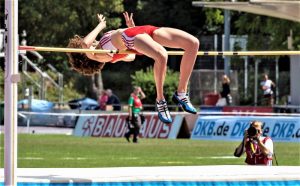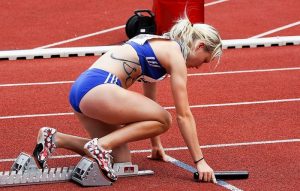
About heptathlon
The heptathlon consists of a competition developed specifically for the female athletic sex in which athletes compete in seven different events including: 200-meter and 800-meter races, 100-meter races with hurdles; high and long jump; and weight and javelin throwing.
Characteristics
The main characteristics of the heptathlon are as follows:
- It is a test consisting of seven different competitions that take place on two consecutive days.
- The sporting events are all performed by the same athlete.
- This type of test is part of the Olympic Games and the World Athletics Championship.
- It can be held indoors or outdoors.
- On the first day of competition there are four disciplines, and on the second day there are three more disciplines.
History of heptathlon
The history of the heptathlon comes from the Ancient Age, when an event known as pentahtle took place, which first appeared in Greece in 708 BC. At that time, there were three qualifying events that included jumping, discus throwing, javelin throwing and running and finally, the fight that was mainly used to break the tie.
In its history as a discipline, it began by competing in a female event called Pentalon, which consisted of 5 different events. With time it evolved, and since the Los Angeles Olympic Games in 1984 was included in the Olympic program as we know it today.
In 1934, the first women’s competition in this athletic discipline took place, and in 1964 it was included in the calendar of the Olympic Games and is replaced by the heptathlon in Los Angeles in 1984. The official competitions began with the Olympic Games in Stockholm, Sweden in 1912, remained on the Olympic calendar until France in 1924. The test events were, long jump, javelin throw, 200 meters flat, discus throw and 1500 meters flat.
Tests
The tests performed in the heptathlon will depend on whether if it is being performed outdoors or indoors, so that:
Heptathlon indoor track
On the first day the following events are disputed in this order
- 60 smooth meters
- Length jump
- Launch weight
- High Jump
On the second day
- Long Jump
- Length jump
- 60 meters fences
- Pole Vault
- 1000 smooth meters
Outdoor heptathlon
On the first day the following events are disputed in this order:
100 meters fences
- High Jump
- Launch weight
- 200 smooth meters
- On the second day
- Length jump
- Javelin Throwing
- 800 smooth meters
Distances
The distances covered during heptathlon tests are:
- 100 meters for fences
- 200 meters in smooth
- 800 meters in smooth
Heptathlon rules
The general rules for heptathlon are:
- Only three attempts can be made in pitches and long jumps.
- The way the bar is raised is uniform.
- The time between jumps is 1.5 minutes in height and 2 minutes in pole vault.
- Jumps or throws are not used for tiebreaking.
- There must be three timekeepers to take the time of each competitor.
- The disqualification in the exits is given when three incorrect exits are made.
- Between the end of the race and the beginning of the next, a minimum time of 30 minutes is given.
- Between the end of one day and the beginning of the next there must be a time of 10 hours.
- Participation is drawn before the start of each event.
Training
The training of heptathlon athletes includes personalized training for each of the disciplines that are disputed during both phases. Proper nutrition and training focused on speed and strength are the most indicated to achieve proper athletic development. Training for jumps, distance and speed are fundamental for the development of the athlete, the slips are widely used by trainers as well as the jump training.
Competitions
There are two important competitions in which heptathlon is practiced:
- World Athletics Championship.
- Olympic Games.
Equipment
The equipment will also depend on the discipline being performed. Probably the most important thing is that athletes have the right shoes and clothes for their sporting routine.