Scandium characteristics
- His atomic number is 21.
- Its atomic mass is 44.956 (g/mol).
- Its density is 3.0.
- Its boiling point occurs at 2730° C and its melting point at 1539° C.
- The symbol that represents it in the periodic table is the Sc and its atomic weight is 44,956.
- The main mineral that forms scandium is thortveitita, which can be found in granitic formations and in some tin minerals, and in rare earths.
- It is a very dangerous element in work areas. This is because humidity’s and gases can be inhaled by people through the air causing pulmonary embolisms and liver
- It causes significant damage to the cell membranes of aquatic
History
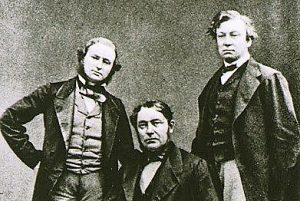
It was discovered by Lars F. Nilson in 1879, in Uppsala, a village in Sweden. Nilson was doing a series of studies of rare earth elements. Part of Nilson’s method required the preparation of erbium oxide from minerals, which then reacted to erbium nitrate. In the procedure, he applied heat to the nitrate and discovered that his sample contained small amounts of an unknown element with a fairly low atomic weight thus demonstrating the existence of a new element. Nilson named the element scandium, a word derived from the Latin word “Scanda“, which means Scandinavia, because the element is found in the rare minerals in that place.
Who discovered scandium?
The Russian chemist Dmitri Mendeleev, inventor of the periodic table, predicted the existence and properties of the scandium, which he originally called “ekaboron”, and mentioned that its composition was similar to that of boron. Lars Fredrick Nilson, a Swedish chemist, when studying and analyzing the spectra of the minerals euxenite and gadolinite, discovered the element in 1879. Per Teodor Cleve, a Swedish chemist, suggested that the new element discovered by Nilson was the same as the element that had been proposed and described by Mendeleev.
Properties
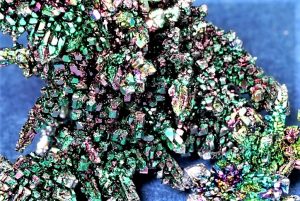
It oxidizes when exposed to air and its color is dyed yellow or pink, this is due to the formation of scandium oxide on the earth’s surface. Alloys that can be made with scandium and aluminum have better resistance to recrystallization and cracking on hot surfaces in conventional alloys. It is mainly used to create high intensity lamps and mercury vapor lamps which are mainly used for photography and television. Scandium produces light that is very similar to natural sunlight. It is also used in the manufacture of alkaline batteries, as a catalyst and to improve the germination of plant seeds. The radioactive isotope Scandium-46 can be used in oil refining as a tracker to monitor oil movement and in underground pipelines to detect leaks.
What is the scandium for?
It has relatively few uses. However, this metal is usually added in small quantities to aluminum and magnesium alloys to make them stronger. Theoretically, scandium could replace aluminum as a structural material. However, the much higher cost of scandium makes the large-scale use of this metal economically very restricted. When mixed with molybdenum, it helps inhibit zirconium corrosion and has also been used as an instrument to filter high velocity neutrons in nuclear reactors.
Where it is found?
This element is found in greater quantity on the moon and the sun than on the Earth. And on Earth, the scandium tends to spread over the surface rather than concentrate in certain places. However, some places where they can be found are countries in China, Kazakhstan, Madagascar, Norway and Russia, and much of this element comes from the stockpiles of materials that were made during the Cold War in the former Soviet Union.