Who invented the praxinoscope
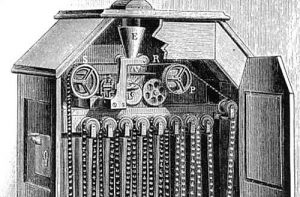
The praxinoscope was a device created for theatre and was invented by Emile Reynaud in 1879. This apparatus was very similar to the zoetrope and even used almost the same system to give animation to the images, it was in itself a kind of zoetrope, with the difference that replaced the drum slots with mirrors inside it. The biggest difference that existed with the zoetrope is that in the praxinoscope, the moving images are seen through a crystal that reflects a latent still image that is the stage.
History
During the 30’s of the 19th century different types of optical toys were developed whose function was to offer movement illusion through different images sequences that passed by different types of shutters. At that time, Reynaud was responsible for making praxinoscopes that were then traded and sold as toys.
The invention received an honorable mention at the Universal Exhibition in Paris in 1878. Years after having invented the praxinoscope, Charles-Émile Reynaud made several improvements to his invention, and in 1888 he baptized it with the name of Théâtre Optique (Optical Theatre). This device was widely used in Europe and the United States as a form of entertainment. In 1888 a step forward was made, and the optical theatre was invented, in which the images of the praxinoscope were projected in public on a large screen.
How the praxinoscope works
The praxinoscope is a toy which function is to create a series of images that constantly change and consists of drawings that follow an order and sequence which are placed on a rotating drum, specifically on its internal wall, which at the same time are reflected by another drum that has different sides provided with a set of mirrors in equal quantity to the number of drawings being presented. These drawings rotate in opposite form so that, they can be seen through special lens designed for this purpose.
As a result of this process, people can observe a clear and clean sequence in which images can merge in a correct way achieving an animation effect. The praxinoscope moves through repetitive movements forming an action marked by activation and deactivation of each object’s mechanism. The gaze and the correct manipulation of the apparatus are two crucial aspects for its good functioning since the spectator must keep his sight fixed.
How to make a homemade praxinoscope
- The first thing we must do is to get a large mirror and then divide it into 12 equal parts to form a pyramid, these mirrors must be adhered with special glue to prevent them from detaching.
- You must get some kind of stick-shaped wood to make the gears to be able to provide drum and mirror movements.
- It is necessary to elaborate or to obtain a wood base that has circular form and to create a central axis in it so that, the project achieves to have a good support and that the balance is the suitable one.
- A wooden handle and a separate base should then be created to provide a better grip, which will allow for adequate rotational movement and the production of optical images.
- After doing this, proceed to paint the parts of the color you prefer and then place the mirrors in the center. At the end of these steps you can draw the sequence that will be placed inside the drum. It is placed inside and rotated quickly to observe the sequence of the images we have drawn.