About performance
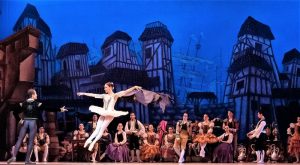
In order to know what performance consists of, it is important to know that the most important part of acting are the actors and actresses who participate in different activities such as theatre, cinema, radio and television. They are people who use a series of movements and imagination to shape different characters within a particular story that has been written by the writer. It is the work that is done by the actors whose function is to represent a specific character. This process begins with an approach of the actor to his character in order to know him and integrate fully with him.
Characteristics
Among the most outstanding characteristics that we can observe in the performance we can mention the following:
- It is carried out through actors or actresses who are responsible for playing different roles in films, plays and other artistic expressions.
- The performance must have a plot that is interesting and a theme, which gives meaning to a particular play.
- The characters are in charge of the performance.
- The characters who act in a particular play can be carried away by what the script or text says.
- Costumes and make-up are two very important aspects of acting.
Performance background
Many of the investigations that have been carried out over time have reached the conclusion that the first manifestations of performance arise in Greece with the first actor known as Thespis. But the profession as such originated in Europe during the 16th century, specifically in Italy.
History
As mentioned above, the Greek Thespis was the first actor to exist and perform at the Dionysus Theatre in 534 BC. On stage, Thespis spoke in first person, thus playing a character. Until then, stories had been told in front of an audience, but everything was always done in the third person and in a sung form. The professionalization of acting began in Europe during the sixteenth century, in the country of Italy, and was born with the first professional companies of Commedia dell’Arte and the companies protected during Queen Elizabeth’s reign. During the 17th century acting roles could only be played by men as it was disgusting for a woman to perform on stage. In Venice’s theatres, the change that allowed women to perform theatrical performances began.
Techniques
The techniques used to perform the action are as follows:
- Stanislavski System: it was a method developed with the objective of training the actor as an artist; it sought the truth and gave shape to its character. It suggests the definition of the actor on the character’s objective that constructs, creating the past and the future of the same based on the present that is interpreted. Stanislavski proposed an honest actor, who expresses emotions, who feels the character, who is committed to the work and the character. He used the theoretical and practical basis of naturalist theatrical aesthetics and theatrical pedagogy of the 20th century. He proposed a system through which the actor searches for and finds the internal causes that originate a result.
- Jerzy Grotowski model: he made a comparison with poverty so that, it was shown to the public in order that the actor could show himself as he really was to the public and thus, the actor represented wealth within poverty. He proposed the use of a theatre that uses technological elements such as lights, sound, etc. According to this method, it is the actor who must illuminate the stage; detach himself from any external accessory in order to construct the character from within. He also had a spiritual opposition to performance because he thought that people had the capacity to liberate themselves and detach themselves from the material.
- Antonin Artaud’s model: for him, the actor was an athlete of the heart. He was influenced aesthetically and ideologically by Dadaism and surrealism, criticizing aristocratic society through the cult of the self. He had great influence from the Balinese theatre which practiced contact with the inner world. For him, theatre was something magical, a ritual in which, by means of a play, he could make the spectator undergo a shock treatment in order to move away from his logical and rational thoughts to introduce him into a world liberated and full of emotions.
Performance importance
The importance of performance is based on how important the characters are within a given work, because it is through them, their gestures, the way of acting that you get in contact with the viewers, making them feel a great number of emotions that can then be expressed as well.