Orson Welles’ private life
His father was a famous inventor, economically wealthy, his mother was a beautiful concert pianist; Orson Welles was talented in many fields (magic, piano, painting) when he was a child. When his mother died, he was only nine years old and dedicated himself to traveling the world with his father. When his father died at the age of fifteen, he became the pupil of Dr. Maurice Bernstein of Chicago. In 1931, he graduated from Todd School in Woodstock, Illinois; he turned down college offers for a drawing tour of Ireland. He tried unsuccessfully to enter the London and Broadway stages, traveling a little further in Morocco and Spain.
After spending a short time in Ireland, where Welles participated in theatre as an actor, he returned to Chicago, where he worked briefly as a theatre teacher at Todd School and co-edited four volumes of William Shakespeare’s plays. Welles and Houseman stopped working with the Federal Theatre Project when they attempted to close their production in June 1937 of Marc Blitzstein’s pro-work The Cradle Will Rock. They organized the Mercury Theatre, which over the next two seasons had an extraordinary number of hits, including a modern Julius Caesar dress (with Welles playing Brutus), an Elizabethan working-class comedy Shoemaker’s Holiday (rewritten by Welles), and George Bernard Shaw. (1856-1950) Heartbreak House (with Welles, 24, convincingly playing an old man). Welles also found time to play “The Shadow” on the radio and to supervise a “Mercury Theatre on the Air,” the most notorious success of which was an adaptation of HG Wells (1866-1946) The War of the Worlds, which provoked the panic of many listeners who believed that Martians were invading New Jersey.
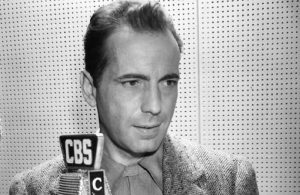
Orson Welles on the radio
One of the best productions that managed to capture practically an entire country was the well-known War of the Worlds: This story was based on the narration of the fall of hundreds of meteorites to the ground that later, in reality, were containers or spacecraft that would fight and defeat the forces of the United States by means of rays of heat and poisonous gases. During the film, people thought they were actually being invaded. Audience data estimates that about 12 million people listened to the broadcast and as many fell into panic by leaving their homes and collapsing roads, stations or police stations. The emergency telephones collapsed for several hours receiving a multitude of messages that said they had seen aliens. The program simulated a news broadcast, and Welles, as its narrator, described in astonishing detail the alien invasion and attack in New Jersey. The program included news reports and witness accounts and sounded so real that listeners panicked over what they perceived to be a real event. When the truth came out, the deceived believers were outraged and deeply angered by the deception and terror generated in thousands of American families.
Orson Welles in the cinema
Despite the anger caused to some of his listeners, the broadcast consolidated Orson Welles’ status as a genius, and his talent quickly became a Hollywood fascination. In 1940 Welles signed a $225,000 contract with RKO to write, direct and produce two films. The deal gave the young filmmaker total creative control as well as a percentage of profits, and at the time it was the most lucrative deal ever made with an unproven director. Welles was very young and only 24 years old. Success was not immediate. The audacity behind that project pale in comparison to what became Orson Welles’ debut film: Citizen Kane (1941). Citizen Kane was a revolutionary work of art.
In the film, which was nominated nine times for Academy Awards (winning the Best Screenplay Award), Welles implemented a number of pioneering techniques, including the use of deep cinematography to present all objects in one shot in detail. Welles also anchored the film’s appearance with low-angle shots and told her story with multiple points of view. It was only a matter of time before Citizen Kane’s genius was praised. It is now considered one of the best films ever made.