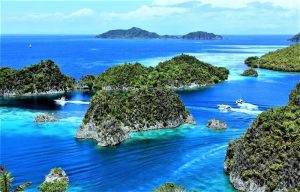
In February 2002, Ministers in charge of the Environment and delegates from Bolivia, Brazil, China, Colombia, Costa Rica, Democratic Republic of Congo, Ecuador, India, Indonesia, Kenya, Madagascar, Malaysia, Mexico, Peru, Philippines, South Africa, Venezuela met in Cancun, Mexico. During this meeting, the countries agreed to establish a Group of Like-Minded Megadiverse Countries as a mechanism for consultation and cooperation so that, their interests and priorities related to the preservation and sustainable use of biological diversity can be promoted.
They also stated during the meeting that they would ask countries that had not yet become parties to the Convention, the Cartagena Protocol based on biosafety and the Kyoto Protocol that sets out guidelines on climate change to become parties to these agreements.
Characteristics of megadiverse countries
The main characteristics of the countries that have been catalogued as Megadiverse countries are the following:
- They are the countries with the greatest number and diversity of animals and plants
- They share a geographical position, since most of these countries are located in the tropical zones of the planet.
- In them we can observe a great amount of flora and fauna.
- They have a great variety of soils, environments and climates that benefit animal and plant life.
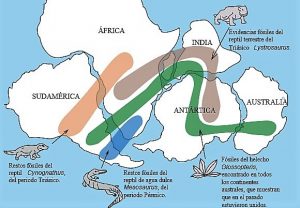
- The separation that they have suffered from the continents and the islands has allowed them the progressive development of the flora and the fauna, in two of these continents.
- The larger the country, the greater the number of landscapes, plants and species.
- Some countries are zones of contact between two bio-geographical regions, which promotes fauna and flora mixing.
List of megadiverse countries
America
The American continent has the largest number of countries considered as megadiverse. It has seven countries that are the following:
- Brazil
- Colombia
- Ecuador
- United States
- Mexico
- Peru
- Venezuela
Asia
This continent is home to five countries considered Megadiverse, and these are:
- China
- Philippines
- Indonesia
- India
Africa
Here we can locate the following countries:
- Madagascar
- Democratic Republic of the Congo
- South Africa
Oceania
This is the last continent in which there are two Megadiverse countries:
- Australia
- Papua New Guinea
Why they are called like that?
Let us remember that biological diversity refers to all the living beings that inhabit the Earth, and the term includes the variety of ecosystems and the genetic maps of the different forms of life. The number of plant and animal species and their relationships and biological forms together constitute the biodiversity of a country or region. So we can say that the Megadiverse countries receive this name because they have unique characteristics that allow them to house a large number of different species.
Many of these countries are located in the tropics, where the conditions for biodiversity are even greater, their landscapes offer a great diversity of environments, soils and climates, and the separation of islands and continents that once suffered, has allowed the development of endemic flora and fauna, which are unique in those places, their large size helps to house more species, their evolution has developed through the contact of several regions where species with different origins have been mixed, and plant and animal domestication by peoples has given rise to great natural wealth in these areas.
Location of megadiverse countries
Megadiverse countries are located in tropical zones in:
- Latin America
- Asia
- Africa
- Oceania