Thanks to Ada Lovelace, the three basic functions of the Babbage analytical machine are clearly explained: to process mathematical formulas, to make numerical calculations and to give algebraic results.
As a programmer, she was very clear about the importance of creating informatics, which she called the science of operations, and even projected the possibility of digitizing music with CDs and synthesizers.
Ada Lovelace is recognized in the computer world for her work on Charles Babbage’s analytical machine.
Biography of Ada Lovelace
Augusta Ada King, known as Ada Lovelace, born in London on December 10, 1815, with the title of Countess of Lovelace, she was a mathematician and writer. Only daughter of the well-known poet Lord Byron and Anna Isabella Milbanke, she enjoyed a good social position that allowed her to interact with the most important scientists of her time.
At an early age, her talents in the world of mathematics friendly linked her to the English mathematician Charles Babbage and his invention of the analytical machine.
In 1835, she marries to William Lord King and becomes Lady King. With William, Ada has three children: Bryon born in 1836, Anne Isabelle born in 1837 and Ralph Gordon born in 1839.
In 1837, her husband held the royal titles of Viscount of Ockham and Count of Lovelace. From that moment on, she ceased to be called Lady King to sign as Ada Lovelace.
In 1841, she writes to Charles Babbage to work with him and leaves her mother’s life to dedicate herself to a more intellectual life.
Between 1842 and 1843, Ada Lovelace translated an article by the Italian military engineer Luigi Menabreas about the analytical machine and complemented this document with notes of her own that she would call “Notes“, which were interpreted as the first computer program. This was an algorithm designed to be processed by the machine.
In 1843, Ada Lovelace’s Notes were published by the English magazine Scientific Memoires under the title “Sketch of the analytic engine, invented by Charles Babbage” but upon discovering that the authorship was a woman, the scientists of that time did not take it seriously.
Ada Lovelace died on November 27, 1852 when she was 36 years old from uterine cancer. Her remains were buried with her father in the village of Hucknalla in Nottinghamshire.
Analytical machine
The analytical machine designed by the British mathematician Charles Babbage had the purpose of calculating numerical differences in order to obtain tables of numbers that would allow programs to be executed and any type of calculation to be carried out. Unfortunately, the idea of Babbage could not be realized at the time because he did not have the financial resources and materials to develop his invention.
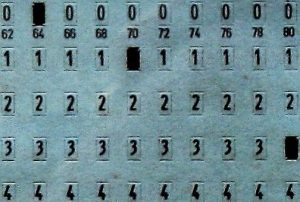
Interested in Babbage’s invention, Ada analyzed in detail the use of this machine for mathematical calculations. This is how the mathematics managed to optimize the design of the Babbage machine including the use of punched cards and a programming language with logarithms to be processed by the analytical machine.
Contributions of Ada Lovelace
Among the contributions generated by Ada Lovelace we can mention the concepts of loop and subroutine; she also wrote the specific plan to calculate the values of the Bernoulli numbers and defined how to use the perforated cards for the programming of Babbage’s analytical machine.
Ada Lovelace’s phrases
Ada Lovelace’s famous phrases include the following:
- “Imagination is the faculty of discovery, preeminently. It is what penetrates the worlds never seen around us, the worlds of science.
- “The analytical machine is capable of tabulating and processing any function; the engine can be described as the material expression of any indefinite function, of any degree of complexity and generality.”
- “The engine is ready to receive at any time, cards as part of its mechanism, with information that can be tabulated or processed in its system.”
- “The operation symbols are often the symbols of the results of those operations.”
- “The analytical machine is the embodiment of the science of operations.”