About tropism
Tropism consists of a series of movements that produce a change in the direction of growth and that occur due to a series of stimuli or external factors. It is a very common movement system, especially in plants, although it can happen in some types of living organisms such as fungi and viruses. Changes in direction will always depend on stimuli.
Contrary to a learned skill, innate reactions are genetically programmed. In this way tropic organisms will naturally turn to a stimulus. A stimulus can be any signal from the environment, and individual tropisms are often named after the stimulus that causes the movement.
Types
There are two types of tropism, the negative and the positive. When the movement is given in the direction of the stimulus, it is said that it is a positive tropism, otherwise, when the movement is given against the stimulus, then we are talking about a negative tropism.
Classification
Tropism is classified as follows:
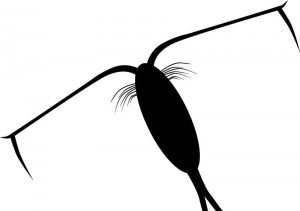
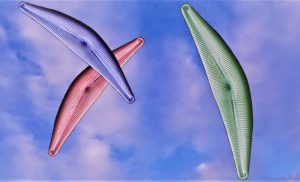
- Phototropism: Many photosynthetic animals produce their food from sunlight. Therefore, light acts as a stimulus for many organisms causing many of them to move towards light. For example, many algae, plankton and small invertebrates have positive phototaxis that takes them to the same area in the ocean, which contains by far, the largest amount of light. Other organisms may show a negative reaction to light and try to move away from it, such as a beetle when you uncover it from its hiding place. The beetle will look for darkness, as darkness usually means safety.
- Heliotropism: this is similar to phototropism, but the position of the organism cannot change. This can be seen in many crops, such as sunflowers, corn and even garden flowers. Following the path of the sun guarantees receiving the maximum amount of light.
- Gravitropism: is known by the name of geotropism and is a growth that occurs as a response to gravity acceleration. The roots sink into the soil and the growth of the stem increases. It is very important for the correct germination of seeds.
- Thigmotropism: happens when, for example, a plant grows on a solid surface. This causes the plants to have developed organs to be able to adhere and they can change the speed at which they grow to control germination.
- Chemotropism: Responses to chemical elements that plants need to get different nutrients or to escape from chemical elements that cause them harm.
There are many other tropisms in nature, due to the great variety of stimuli that organisms can perceive. For example:
- Thermotropism: a tropism that causes organisms to move towards a specific temperature.
- Magneto tropism: many animals can use magnetic fields as a source of direction and be attracted to certain poles.
Viral tropism
Seen from a cellular and biological point of view, we also find a type of tropism called “viral tropism”. This occurs when a type of virus has a highly specific attraction to a particular cell. Viruses are able to develop a specific ability that allows them to attack the cells by selecting which one to attack.
Tropism in psychology
In the area of psychology, tropism refers to the ability of individuals to acquire new functions through experience. These functions are gained thanks to the learning that the individuals have. Depending on the species, it will be tropism. Psychological tropism is also governed by reflexes, which are linked to the physical and chemical characteristics produced by stimuli.
Difference between tropism and nastia
The difference between tropism and nastia is that tropisms are changes produced by a positive or negative stimulus but that occur permanently. The nastias produce the same results, but they are temporary changes, this means that the plant at some point will return to its original state.
Examples
Non-climbing plants will respond to the constant presence of a good sized object by varying the route of its stems and trying to escape into the open air, especially if the object in question restricts their sunlight, water or growth space.
When there are earth movements that leave exposed the roots of a tree, these will look for the air and, they will try to get into the ground, whatever the cost, since they will not be able to extract their nutrients from the air.