What happened in the Pleistocene?
During this stage, the Earth cooled down, which had a great effect on its animal life; the different types of animals, or ecological populations, were severely altered and even some of them were completely eliminated. Some of these species became extinct, and at the same time new ones were born. As the ice caps accumulated in greater numbers, sea levels fell. Under the sea began to emerge land bridges, the most famous was the Bering land bridge and the land bridge between North America and South America and because of this, a wave of animal migrations to the continents began.
Pleistocene characteristics
The main characteristics of the Pleistocene are mentioned below:
- The continents were already in the places they occupy today.
- The climate was a repetition of glacial cycles.
- It is believed that about 30% of the planet was covered by ice.
- The oceans descended in level, which originated land bridges in areas that were previously isolated.
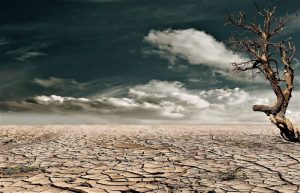
- There was more drought and, in addition, a greater degree of scarcity in the amount of rain.
- There was very little evaporation from oceans and lakes.
- There was the extinction of some types of animals such as mammoths and mastodons.
Pleistocene periods
The Pleistocene periods were as follows:
- Gelasian: this period is considered to be a geological age that begins approximately 2,588 million years ago and ends 1,806 years ago.
- Calabrian: it is the second age of the Pleistocene and happened between approximately 1,806 and 781 million years ago.
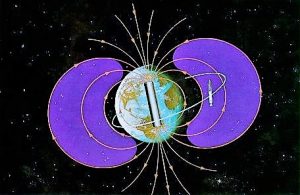
- Ionian: it is between 0.781 and 0.126 million years old and its limit seems to coincide with the magnetic inversion of Brunhes-Matuyama.
- Tarantian: is the most recent age and precedes the time of the Holocene.
Weather
The climate was extremely cold and ice sheets were found covering all of Antarctica, large parts of Europe, North and South America, and small areas in Asia. In North America, the ice sheets spread over Greenland and Canada and parts of the northern United States. The remains of Ice Age glaciers can still be seen in some parts of the world, including Greenland and Antarctica. All of this was known as glaciations.
Glaciations
Glaciations was the name that was used to designate the set of glaciers or cold phases that were interspersed by phases that were a little warmer. These cold phases occurred mainly in the northern part of the earth; however, they reached the rest of the world.
During these phases, extremely cold temperatures were present, there was no rain, and large masses of ice, sometimes even larger than a thousand meters, covered the earth.
When the temperature rose, these masses of ice began a process of defrosting and the rains began causing the seas to rise their levels, and as a result, most of the coast of the seas suffered great changes, including the flora and fauna of these places.
The scientist Milutin Milankovitch, of Yugoslavian origin, made several calculations on the solar receptions that were obtained during this phenomenon, and according to his studies great variations happened in the form in which the orbit of the earth is positioned around the sun, there were changes in the angle obliquity with the Earth’s orbit and there was a fluctuation of the earth’s axis.
Pleistocene flora
The flora looked for more sheltered areas to develop as the bottoms of the valleys, from which the forests later arose. With each glaciation changes arose, it also had an advance in becoming a tundra, making the species more resistant to the climate. Humidity caused new species to emerge, such as deciduous trees and thermophilus plants. In the third period, the temperate forest arose, there were prairies and steppes.
Fauna
It was known by the name of Megafauna. In the first period, the animals were large carnivores, apes and three-toed horses; there were also mammoths, bears, lynxes, rhinoceroses and cave lions. In the transition period, deer, elephants, and split-nosed rhinoceros could be found.