Osmium characteristics
- Its name, symbol and atomic number respectively are: Osmium, Os, 76.
- Its atomic mass is 190.23 u.
- Its electronic configuration is: [Xe] 4f145d66s.
- It is a slightly acidic oxide.
- It is usually found in solid
- Its melting point is: 3306 K (3033 °C) and its boiling point is: 5285 K (5012 °C).
- Its vaporization enthalpy is: 627.6 kJ/mol and its melting enthalpy is: 627.6 kJ/mol: 31,8 kJ/mol.
- It has an electrical conductivity of: 10,9-106 S/m.
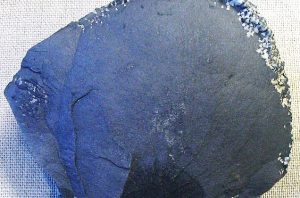
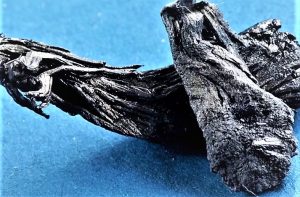
- It is greyish-white, hard and quite bright.
- Its atomic number is 76.
- It is the densest element of all those that exist with a weight of 22.6 g/cm3.
- It is a little active element and very stable from the chemical point of view.
- When found in its pure form it is not used, it is used in alloys as a platinum hardener and as a kind of catalyst.
History
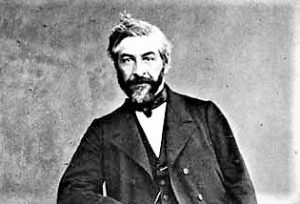
It was discovered by the British chemist Smithson Tennant in 1803. At that time, osmium and iridium were identified in the black residue remaining after dissolving platinum ore with water, a mixture of 25% nitric acid (HNO3) and 75% hydrochloric acid (HCl). Osmium comes from the Greek term osme, which means smell and odor.
Who discovered osmium?
Smithson Tennant discovered it in 1803.
Properties
Alloys which can be obtained by joining osmium with other elements such as rhodium, ruthenium, iridium or platinum are used in the manufacture of fountain pens, compass tips, phonographic needles, electrical contacts and instrument pivots. They are used in the creation of these materials because of the extreme hardness of this element and its great resistance to corrosion. Osmium tetroxide, OsO4, is highly toxic to people, concentrations in the air as low as 10-7 g/m3 can cause lung congestion, skin damage, and serious eye damage, for this reason should be handled only by properly qualified chemists. It is prepared by quite complex chemical processes from platinum minerals in which it is found in very small proportions and as a by-product in the osmium-rich ores of nickel and copper minerals.
What is it for?
- It can be used as a hardening additive in alloys. When an alloy is made with platinum, it is used for measurement and weight standards.
- The main use of this metal is in the osmiridium alloy used for making tips, pivots, etc.
- The manufacture of high hardness alloys with other elements of the platinum group is frequently used in the manufacture of ballpoint pens.
- Osmium alloys are used in electrical contacts where high strength is required.
- It oxidizes in the air, forming osmium tetroxide, OsO4, and reacts with fluorine and alkaline.
- It forms salts with valences between +1 and +8.
- It is used in the manufacture of incandescent filaments and as a catalyst, and one of its derivatives is used as a fixative in the histology branch.
- It is used to produce very hard alloys with other metals of the platinum subgroup,
- Osmium tetroxide is also widely used in the detection of fingerprints and staining of fatty tissues for microscopy.
Where it is found?
This element can be obtained in sands containing platinum, iridium and a small amount of other metals. After an extensive process of enrichment of the sands it is passed to the treatment with treated water, and in this way the platinum is obtained. It must then be separated from ruthenium by reduction with alcohols and precipitated in the form of OsO4. Purification is by distillation.