Characteristics of the midbrain
The main characteristics of the midbrain are as follows:
- It is also known as the middle brain.
- It arises from the union of the cerebral region that joins the brainstem and the cerebellum.
- In its upper part we can find the diencephalon.
- It has a conduit through which the cerebrospinal fluid
- It provides mechanical stability to the organism.
- It transmits sensory impulses from the spinal cord to the brain regions.
- It passes through Silvio’s duct, through which the cerebrospinal fluid flows.
- In its interior it has nuclei that are in charge of the movements of the eyes.
Location
The midbrain is one of the main parts of the brain. It is located in the upper area, over the Varolio Bridge, and just below the diencephalon, and is a structure composed mainly of the thalamus and hypothalamus. It is the part of the brainstem that is closest to the center of the brain, while the bulge and the spinal bulb are more oriented toward the spinal cord.
Parts
The two parts that make up the midbrain are the following: the tectum and the tegmentum.
Tectum
It is located in the dorsal part of the midbrain, channeled towards the nape of the neck. The term etymologically means “roof”. All its functions are closely related to the automatic reactions to auditory and sonorous stimuli.
It is made up of two pairs of lumps, one on top of the other. These lumps are known as colliculus. The superiors play a very important role in the vision and orientation of the eyes with respect to visual stimuli. The lower ones are related to involuntary reactions to sounds
Tegmentum
It’s located in the ventral part of the midbrain. It contains three main zones, each of which is associated with a color: the black substance, the periacueductal grey substance and the red nucleus.
The black substance is a substance located in the upper part of the midbrain and its function is mainly associated with movements and muscle tone. The red nucleus has important functions in the body’s motor system and the grey substance is located around Silvio’s duct and participates in analgesic processes in general.
Function
The main function of the midbrain is to conduct and control motor impulses from the cerebral cortex to the junction of the spine and brain. It is responsible for generating all sensory impulses that are shown through the spinal cord.
There is a part in the midbrain known as the upper quadrigeminal tubers, which function is to generate the movements made by the ocular balls and which arise as a sensory response to stimuli originated by sight. The inner quadrigeminal tubers are in charge of recording the auditory stimuli and the different movements that we carry out with the head and that are related to them.
Diseases and injuries of the midbrain
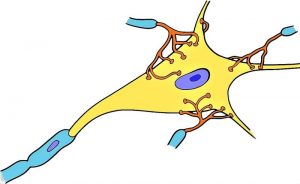
Any type of injury to the human body that affects the brain can also damage the midbrain. When it is affected, it usually leads to coma and death. This is because it is related to the basic physiological functions of the organism and the nerve impulses of the neurons.
The main pathologies related to the midbrain are:
- Alzheimer’s disease: this is one of the most frequent neurodegenerative It is a chronic and irreversible disorder that causes the deterioration of the mental faculties.
- Parkinson’s Disease: Considered to be the most common degenerative neurodegenerative disease after Alzheimer’s that affects voluntary body movements. It is not a disease that can be cured, but there are treatments to alleviate the symptoms it presents and slow down the physical and cognitive deterioration suffered by patients who suffer it.