About the Lenz’s law
The purpose of Lenz’s law is to predict the direction of the electromotive force generated in an electric circuit. This takes place from the fact that the generated electromotive force (or the direction of the current), is such that its magnetic consequences oppose or repel the flux variation of the magnetic field where it is produced.
This magnetic flux grows through a spiral and the electric current found, which is able to generate a negative flux magnetic field, which decreases successively the increase of the original slack.
Who proposed Lenz’s law?
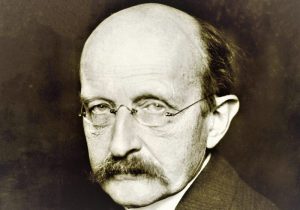
The Law of Lenz is so called by the one who created it, Heinrich Friedrich Lenz, physicist of German origin who studied chemistry and physics. This scientist focuses on studying climatic conditions at first, until 1831 when he decides to focus on the study of electromagnetism, making the most significant contribution throughout his career: “The sense of the currents or induced electromotive force is such that it is always opposed to the cause that produces it, that is, to the variation of the flow”.
It thus completes the theory presented by Faraday, in one of the most significant associations to physics advancement.
History
Heinrich Friedrich Lenz dedicated himself to the field of physics and chemistry during his career, becoming a professor and then rector at the University and Academy of Sciences of the city of St. Petersburg. At the beginning, he studied the Peltier effect, the conductivity of metals and the variation of the electrical resistance with temperature. Lenz studies electrical conductivity and then, he discovers what the Joule effect is at present, achieving from it, the study of the independence of electrical variations, in an exchange of experiences and conclusions that allow him to enunciate the well-known law of Lenz in 1834. In this way, Lenz contributes to an important advance in electromagnetism, making it possible to determine the sense and direction produced by the variation of energy flows.
Formula
Lenz’s law is mathematically expressed as follows:
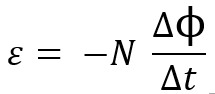
- E stands for emf (electromotive force).
- N represents the number of spirals.
- ∆ϕ is represented on webers and represents the flow of magnetic induction.
- ∆t represents the time expressed in seconds.
It should be noted that the sign – is to indicate that the polarity of the tension is such that it opposes the cause that produced it.
Applications of Lenz Law
Alternators are devices that generate alternating electric currents, hence their name. They are made up of two essential elements: the rotor, which causes the whole to rotate, and the stator, which surrounds the previous one and rotates around its axis. These alternators generate an alternating current with the purpose of being used for motors, generating in turn, mechanical energy starting from the electrical energy; with only the connection of the brushes of an alternator with another generator. This induces a reorientation and an indefinite turn of the spiral of the second alternator while the contribution of a current is counted.
Example
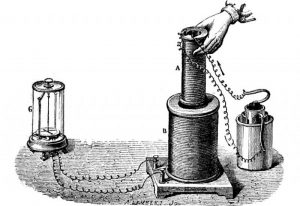
One of the examples of Lenz’s law found in everyday life is the approximation of the south pole of a magnet to a loop, which generates that the induced electromotive force is negative and opposes the cause it produces; the current circulates through it in such way that the loop behaves like a south pole in front of the magnet, which it must try to repel.