Gastropods have figured prominently in paleo biological and biological studies, and have served as study organisms in numerous evolutionary, biomechanical, ecological, physiological and behavioral investigations. They are extremely diverse in size, body, shell morphology and habits, and occupy the widest range of ecological niches of all mollusks, being the only group that has managed to invade the land.
Characteristics of the gastropods
The main characteristics of the gastropods are as follows:
- Their most common representatives are snails and slugs.
- Their diet is quite varied.
- They have a heart with one ventricle and sometimes one or two auricles.
- Their skin is rich in mucus-secreting glands that help them move from one place to another.
- They are able to insert their head into the shell when they feel in danger.
- They can live on land or in fresh or saltwater.
Types of gastropods
There are marine and terrestrial gastropods. It is considered that the majority are the ones that inhabit the ocean and are herbivores, detrivorous and carnivores. Many of them are also excavators and have siphons to get oxygen and food. They breathe through gills and some have developed lungs.
The terrestrial ones also have shells, and most have lungs, usually they can be found in humid or wet environments. Their muscles are strong and use the mucus they release to get up rough surfaces. They have tentacles in the head and a primitive brain. In addition, they are hermaphrodites and lay nests on the ground.
Classification
The classification of gastropods is as follows:
- Opisthobranches: they are marine and have the gills behind the heart.
- Prosobranchs: They can live in marine or freshwater.
- Sistelomatophores: They are terrestrial and in this group are the terrestrial slugs.
- Pulmonated: They are terrestrial, with shell and pulmonary respiration.
Nutrition
Their type of nutrition or feeding is very variable, for this reason, many of them can be carnivores, herbivores, scavengers, some can get to ingest particles that are in suspension, and also parasites.
They usually feed on algae or tiny animals. Some mollusks live fixed in the substrate and have the ability to move close to where they are fixed foraging for food.
Some carnivorous gastropods may ingest echinoderms, bivalves, other gastropods, fish and crustaceans. Those belonging to the scavenger group may eat dead fish that are in suspension. Slugs and land snails are completely herbivorous.
Habitat
The favorite habitat of the gastropods is the rocky coast since it is an inhospitable place, because it is there where the waves break on the rocks.
They are distributed from the intertidal zone to the abyssal depths, to the fresh waters of rivers and lakes to which they have been able to adapt and there are also those who have managed to learn to live on land. Some of them are also able to stay for long periods out of the water, which helps them face low tides.
Reproduction of the gastropods
Almost all gastropods have an ovary or testicle, and the type of fecundation can be external or internal. Most of them expel sperm and eggs that have not been fertilized into the water where an external type of fertilization occurs. Some of them may be unisexual or hermaphrodite. These changes in sex depend greatly on the number of females at the time of fertilization.
Breathing
Their breathing may be aerial or aquatic. In the case of aquatic respiration, this is done through gills that are located in the paleal cavity, depending on the species so will be the number of gills you have.
In the case of beings who have aerial breathing, this is done through the paleal cavity which is a very vascularized cavity and works in the same way as a lung does.
Fossils
In the Mesozoic era, the ancestors of today’s gastropods evolved. One of the first known is the Maturipupa, which was found in Europe. In Mesozoic rocks, gastropods were found in greater abundance and were better preserved. Their fossils appear in marine and freshwater sediments. In southern England, fossils of the lake snail Viviparus have been found.
Cenozoic rocks have fossil gastropods, related to current forms. Diversity increased markedly at the beginning of this era, along with that of the bivalves. Gastropods are one of the groups that best provide information on changes in fauna caused by the advance and retreat of the ice during the Pleistocene.
Examples of gastropods
The most common gastropods we can find are:
- Snails: they have shells and are terrestrial. They are moved by muscular contractions.
- Slugs: they are marine mollusks; some have shells and others do not. Some of them have their dorsal surface covered with tentacles.
- Marine snails: they have a quite developed shell and can close it. It has gills in the paleal cavity, and its nervous system is well developed. They have tactile eyes and tentacles.
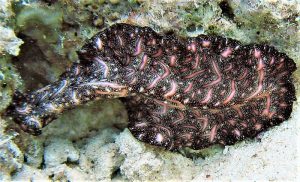
- Sea hares: their skin resembles that of the leopard and their size is medium. They live near the coasts of tropical and subtropical seas.