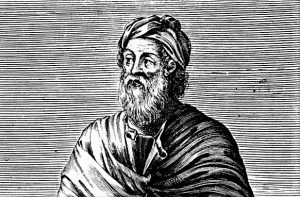
About existentialism
In simpler terms, Existentialism consists of a philosophy that seeks to find the self and the meaning of life through free will, choice, and personal responsibility of each individual. It considers that people are seeking to discover who and what they are throughout life as they make decisions based on their experiences, beliefs and perspectives. And these personal choices become unique without the need of any objective form of truth. An existentialist believes that a person should be forced to choose and be responsible without the help of laws, ethnic norms or traditions.
History
Existentialism arose as a result of philosophical work that developed between the nineteenth and twentieth centuries, in which there was a clear search for the reason for existence from the individuality, emotions, actions and responsibility that each individual had.
The philosopher Soren Kierkegaard is considered the father of existentialism, and he was the one who determined that each human being must find the meaning of his existence. The term was used in the 1940s with Jean-Paul Sartre and Albert Camus, who are now considered to be the greatest exponents of existentialism.
Characteristics of existentialism
The main characteristics of existentialism are the following:
- Its posture has pessimistic thoughts and attitudes that produce notorious uneasiness.
- He seeks with eagerness to reveal the meaning of man’s existence.
- It proposes to discuss problems such as the relationship between man and divinity, freedom, the meaning of being, nothingness.
- It has influenced many artistic manifestations.
- One of the most expressive artistic fields of existentialism has been literature.
- The theory said that every human being is one hundred percent responsible for his acts because he enjoys complete freedom.
- One of its key points is the choice.
- It says that the human being only exists if he has meaning for his own life.
- Positively, it affirms human existence.
Types
There are several types of existentialism, the three most important are the following:
- Atheist existentialism: it tells us that man does not need or have any kind of rule to be able to live and that there is no God who imposes these rules. For them, man can give meaning to his life no matter if what he does is moral or immoral, they think that life should be lived and look for a way to satisfy all needs no matter what the consequences might be. Nor do they believe that they can be saved by someone and that power is everything.
- Christian Existentialism: tells us that there is a God who gave us the commandments to follow. It says that principles and values serve as the basis for forming a good person’s morals and that we should live life the right way, following rules, being prudent and avoiding hurting others. There is a fear of God and salvation is sought.
- Agnostic Existentialism: considers that some statements regarding the existence of God are unknown and live in a state of suspension of beliefs. It is based mostly on the intellect to find demonstrable conclusions. It is a philosophical posture that says that humanity does not have rational foundations to justify other beliefs.
Literary existentialism
It was the way in which some existentialist philosophers found the manner of transmitting thought. The greatest representative of existentialist literature was Fyodor Dosteoivski. The authors were in charge of expressing the different existential problems and the works reflected the anguish suffered by contemporary man, the feeling of feeling lost without reason.
Existentialism in education
In the field of education, existentialism tells us that teachers must be aware that they exist as human beings as well as their students, and that these are not simply objects, that they are thinking and intelligent beings and that teachers have the existential freedom to choose the best methodology to teach their students, the freedom to choose the best tools to evaluate them, the best texts to search for information, the use of the best didactic material to improve and make the learning of the contents simpler, and it also says that the exercise of this freedom must foster the capacity to participate, to question with valid arguments to improve its use.
Existentialism in psychology
It bases its perspective on existential philosophies and focuses on the human condition as a whole, on therapy focuses on human capabilities and helps individuals take responsibility for their successes. It also focuses on the conflicts a person has when faced with a world that threatens existence. Both emotional and psychological difficulties are an internal conflict that is caused by the individual’s confrontation with his existence.
Importance
It is important because it is a theory that shows interest and concern for individual freedom, faces the different aspects of the human condition that are not often thought of, sees human experience as an essential part of life that helps us face the world, which makes it important for man to lead a correct and adequate life depending on their actions.
Representatives
- Sören Kierkegaard: he was a Danish philosopher and theologian, whose interest in existence had a great influence on modern Western theology and philosophy.
- Martin Heidegger: was a German philosopher who founded existential phenomenology and is considered one of the most original thinkers of the 20th century. He spoke of the structure of everyday life, what he thought was an interrelated system of aptitudes, social roles, projects and intentions.
- Jean-Paul Sartre: French philosopher, playwright, novelist and political journalist, considered the main representative of existentialism. He qualified his own philosophy using the term and became the great promoter of the movement at the international
- Karl Jaspers: German philosopher and psychiatrist, who was one of the founders of existentialism. His work had a decisive influence on theology, psychiatry and philosophy of the twentieth century.
Works
Some important works of existentialism have been the following:
- The Nausea (Jean-Paul Sartre): novel that mentioned the principles of existentialism.
- Weddings (Albert Camus): set of articles inspired by readings and travels.
- The Plague (Albert Camus): describes ideas of solidarity and the human being’s capacity for resistance.
- Diary of a seducer (Soren Kierkegaard)
- The second sex (Simone de Beauvoir)
- The Black Heralds (César Vallejo)
- The Foreigner (Albert Camus)
Phrases
Some of the most famous phrases of existentialism are the following:
- Convictions could be more dangerous enemies of truth than lies.
- There is hardly any passion without struggle.
- I rebel; therefore I exist.
- Some men become the person for whom they were born.
- The universe seems neither benign nor hostile, simply indifferent.
- All power is essentially power to deny mortality.
- Only after you have lost everything are you free to do anything.
Examples
Some examples of existentialism that we can observe in daily life are the following:
- The infidelity that we observe when a person mentions the phrase “he had no choice and let himself be carried away”. This is not true because you can always choose and when two people really love each other there is no infidelity.
- Another of everyday life would be when a student does not study for a test because first they have to play, and the most important thing is to study because it is the best thing to do.