Characteristics of the celestial spheres
- They are imaginary spheres whose surface can project the stars that are visible to the naked eye.
- A complete rotation of the celestial sphere occurs in 23 hours, 56 minutes and 4 seconds.
- It has a sunken appearance in a vertical direction of the place, creating an optical illusion that makes you see the stars that are closer to the horizon more distant.
- They have less light because luminous rays cross a greater area in the atmosphere, so their light is disassociated.
- Their diameter is apparently the angular separation of two visuals recorded in a supposed diameter of the star.
- It is reciprocally proportional to the distance that separates it from the one who sees it.
- Celestial spheres have a zenith, which is the meeting point between the vertical and the celestial sphere.
Celestial spheres history
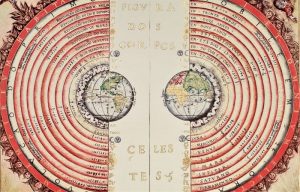
Anaximander was the first scientist to introduce celestial sphere concepts in Ancient Greece. In his cosmology, the sun and the moon were a type of open vent in tubular rings of fire that were enclosed in tubes of condensed air, which were the revolving wheels that rotated in the center of the earth. For Anaximander, first a sphere was formed and then the celestial rings which were composed of stellar spheres. Anaximander also held that the stars, the sun and the moon along with the planets were made of fire and that the stars were held by a sphere of crystal which rotated. For him, the stars were fixed, but moved around a circle by the stellar sphere, the sun, the moon and the planets. Sometime later, Pythagoras, Jennaphenous and Parmenides established the theory that the universe had the shape of a sphere and Plato took it upon himself to propose that the body of the cosmos had been created to perfection in a sphere that contained stars fixed in their position.
Celestial spheres harmony
The harmony of the spheres is a rather ancient theory whose origin is descended from Pythagoras and which is based on the idea that the universe is governed according to the numerical proportions that are in harmony and that celestial body movement depending on the sun, moon and planets are governed according to musical proportions. The word harmony extends throughout the whole and seen from the mathematical point of view, but also includes an esoteric sense according to Pythagorean mysticism. The theory is documented in quite ancient texts dating back to the time of Plato and Aristotle and the theory has continued to exert great influences on different thinkers and humanists. Several scientists have agreed that the stars move in a circular and harmonious way. For this reason Copernicus has been considered the forerunner of modern astronomy as he provided the foundation that allowed Newton to finish the astronomical revolution.
Celestial spheres revolutions
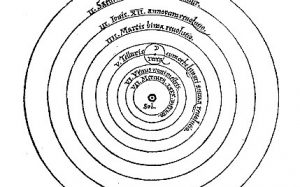
Polish astronomer Nicholas Copernicus argued that the sun was the only center of the universe and that the earth was another planet moving around the sky. Copernicus sought to establish an elegant order of the universe. By that time, many scientists and astronomers were amazed by the movement of Mercury and Venus. Their model assumes a perfect circular motion of the stars in the sky. Concentric circles or epicycles explained the movement of all planets. Copernicus’ circles were small but necessary to prove his theory.