Antonio Canova
In art history, the Italian sculptor Antonio Canova has a very important place for his virtuous production in marble and for being considered by many specialists as the best neoclassical sculptor in Europe.
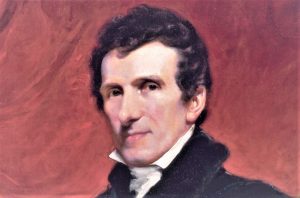
Personal Information
- When he was born: 01/11/1757
- When he died: 13/10/1822
- Nationality: Italian
Who was Antonio Canova?
Antonio Canova was a neoclassical Italian sculptor and painter who was born in Possagno, Italy, on November 1st, 1757. He was considered the best European sculptor and his works have influenced other sculptors. He was director of San Lucas Academy in Rome and an inspector of the Antiquities and Fine Arts of the Pontifical States. He received several prizes for his works and was awarded with the title of Marquis of Ischia. His works, inspired by ancient Greece, touch on different themes such as heroes, characters from Greek mythology and funerary monuments. Among his many well-known sculptures are "The Three Graces", "Orpheus and Eurydice", "Venus Victrix" and "Psyche reanimated by the kiss of love". He died in Venice on 13 October 1822. In his home town, Possagno, the Canovano Museum of Possagno was created and many of the works and data about the life of this artist can be seen there.
Many of his works decorate world-renowned museums and are studied by young people and adults in books and art courses. Among his best known works are: “The Three Graces”, “Venus Victrix” and “Psyche reanimated by the kiss of love”.
Antonio Canova biography
Antonio Canova was born in Possagno, Italy in 1757. Son of a humble family, he had to do other jobs before he could study art. In 1768, he moved to Venice, where he began to be known as a sculptor and achieved the prestige he had developed throughout his life.
His first sculptures made in Venice show a baroque style. This is the case of the works “Orpheus and Eurydice” and “Daedalus and Icarus”.
In 1781 Canova established himself in Rome as a recognized artist for his sculptures inspired by classical antiquity and for being influenced by theoretical principles of Winckelman, Milizia and other authors of neoclassical movement.
Canova formed through the daily practice of drawing and the perfection of her nudes with perfect polishes that embody the aesthetic beauty of her represented characters.
Thanks to his fame as a neoclassical artist, Antonio Canova made commissions for important figures of his time such as Napoleon and Catherine the Great of Russia.
Among the best known works for these characters is the portrait of Napoleon’s sister, Paulina Borghese and “The Three Graces”. In addition, the artist made a sculpture titled Venus Victorious in which Pauline is the one who represents the Goddess of fertility. He also made the sculpture of Napoleon naked.
Antonio Canova is also known for sculpting monumental graves for Popes Clement XIII and Clement XIV. His fame as an artist opened many doors for him and turned him into an influential man who had the support of the papacy and who was entrusted with the task of recovering the works of art plundered by Napoleon.
Antonio Canova died in Venice on 13 October 1822.
Characteristics of Antonio Canova’s work
In his works, the following characteristics stand out:
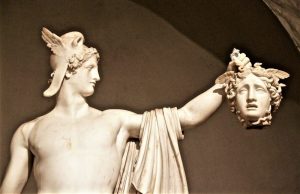
 His artistic style is neoclassical and romantics.
- His specialty is sculpture and painting.
- Its theme is focused on female sculptures, heroes, characters from Greek mythology and funerary monuments.
- It has a refined treatment of marble.
- His works are inspired by models of antiquity, having as tradition to portray mortals in the figures of divinities.
- He works with real size proportions in many of his works.
- His works must be viewed from various angles to appreciate all their forms.
- His pieces are loaded with subtlety, delicacy, sensuality and eroticism.
Antonio Canova’s works
Among Antonio Canova’s most representative works are the following:
- Theseus and the Minotaur, 1781-1783.
- Tomb of Clement XIV, 1783-1787.
- Eros and Psyche, 1787-1793.
- Venus and Adonis, 1789-1794.
- Tomb of Archduchess Maria Cristina of Habsburg, 1798-1815.
- Players of astragals, around 1800.
- Perseus with Medusa’s head, 1800-1801.
- Pauline Bonaparte as Venus victorious, 1804-1808.
- Venus italic, 1804-1812.
- Theseus in battle with a centaur, 1804-1819.
- Dancer, 1812.
- The Three Graces, 1815-1817.
Venus victorious
One of Antonio Canova’s most outstanding works is the Venus Victorious which is represented by Paulina Bonaparte. This marble work was produced between 1804 and 1808.
Paulina Bonaparte appears lying on a Roman-style bed embodying the image of the mythological goddess. Canova highlights the satin turgidity of the marble, the feminine sensuality and takes up again the theme of the Venetian sleeping Venus.
Napoleon as peacemaker Mars
This sculpture made by Antonia Canova between 1803 and 1806 portrays Emperor Napoleon as the victorious god Mars. This marble work depicts the great naked general wearing a military cape resting on his left shoulder. In his left hand he holds a lance and in his right hand he takes a golden globe dominated by a Victory with wings.


How to cite this article?
Briceño V., Gabriela. (2019). Antonio Canova. Recovered on 28 January, 2026, de Euston96: https://www.euston96.com/en/antonio-canova-en/