Troposphere characteristics
It is in this atmospheric layer that meteorological phenomena such as wind, rain and snow occur. Every time the sun warms the ground, the hot air rises. From this moment the water evaporates and rises with the hot air to colder heights. Because the cold air cannot absorb all the water, it condenses into clouds. When the Tropopause is reached, the water and air cease to rise and rain, snow or hail form.
It is in the troposphere where we find the highest oxygen and water vapor concentration that makes possible biosphere life, place in which all living beings have the capacity to develop. It is a temperature regulator for earth. Without the troposphere, the thermal differences between day and night would make life impossible. This characteristic is one of the most important for living beings. This is the place where the well-known Greenhouse Effect occurs thanks to the presence of gases such as carbon dioxide and water vapor, which are responsible for absorbing infrared radiation from the sun and 88% of it but is emitted by the earth. The solar rays pass through the troposphere and become “trapped”, causing the earth’s temperatures to be suitable to inhabit it.
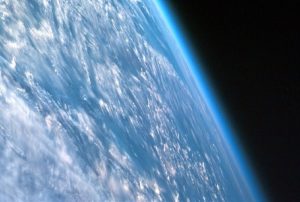
Is in this layer where the airplanes fly. They have to pressurize their cabins due to the lack of oxygen and the cold at the height of the flight. The troposphere is the thinnest layer of the atmosphere, but at the same time it is where the most turbulence is found.
Troposphere composition
The largest amount of gas we can find in our atmosphere is nitrogen. Approximately 4/5 of the air that exists in the troposphere is nitrogen and the largest amount of gas in it is oxygen, necessary to breathe. But there are also small amounts of other chemicals. It also contains greenhouse gases that trap the Sun’s heat in our atmosphere. Earth would be very cold if we didn’t have greenhouse gases. Carbon dioxide and methane are two very important greenhouse gases found in the troposphere. Other gases we find are nitric acid, sulfuric acid and nitrogen oxide.
Troposphere properties
The main properties are density, amount of humidity, temperature and pressure. All these factors are extremely relevant to climate and soil temperature establishment. Density and pressure are also influenced by altitude and air becomes scarce at higher altitudes. It is able to give rise to different weather states and by means of water vapor and dust particles happens cloud formation.
Function
This important atmosphere layer acts as a thermal regulator for the planet; without this layer and without temperature regulation the thermal differences between day and night would be so great that we would not be able to survive. It is of vital importance for living beings
Weather phenomena
Weather phenomena have their origin in the troposphere, because from there, clouds do not develop. These meteorological phenomena are formed by changes that occur in the warming caused by the sun in different regions of the planet. This situation causes the convection of currents and winds, which, accompanied by changes in pressure and temperature, give rise to climate phenomena.
Temperature of the troposphere
Were it not for the tropopause, our planet would lose all the water we have because it would evaporate and migrate to outer space. It could be said that the Tropopause is an invisible barrier that keeps our temperature conditions stable and lets the water stay within our reach.
Pollutants
All those combustion processes that generate some kind of energy and force in all industrial activities and thus produce waste gases that generate gaseous by-products that are not useful and are released into the atmosphere pollute the troposphere. Manufacturing, garbage burning, fish meal production, domestic kitchens, small-scale businesses, etc., are the ones responsible for producing more pollutants every day. When these waste products are released into the air it does not mean that they will disappear, but that they can become semi-permanent components, causing serious air pollution.
Importance
- This is where meteorological changes that govern the planet take place.
- It protects us from ultraviolet rays and radiation.
- It is the means by which airplanes move from one place to another facilitating communication.
- It is a thermal regulator of our planet.