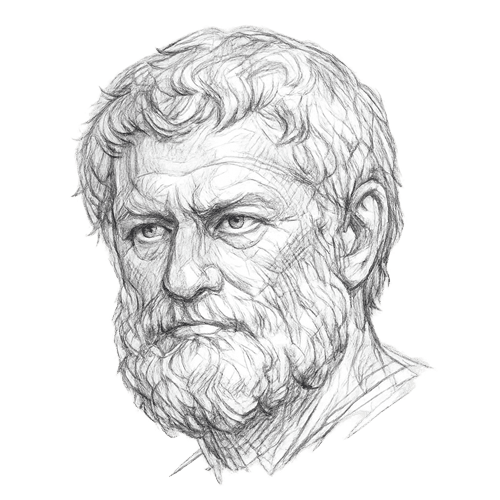
❯ The Trajectory
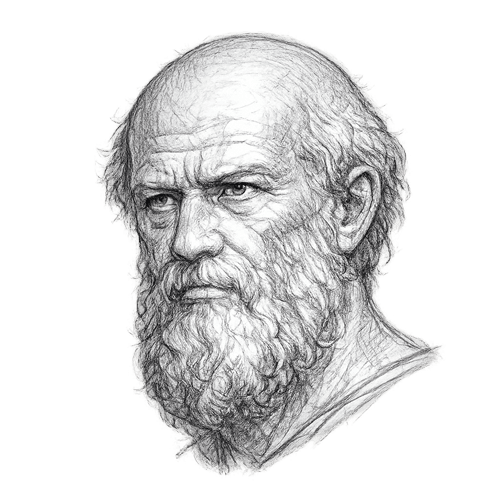
Thales consolidated a new rational way of explaining reality. Before him, the world was explained through gods and legends; after him, the universe became a rational space. He was not merely a "library philosopher" but a man of the world: a traveler, political advisor, and a restless observer of nature who lived a life of both political and scientific action.
Origins in Miletus
Born in Miletus, a key city where East and West met. Although his origins are debated—between Phoenician roots or Greek noble blood—Thales became the most illustrious citizen of his era.
The Mystery of Egypt
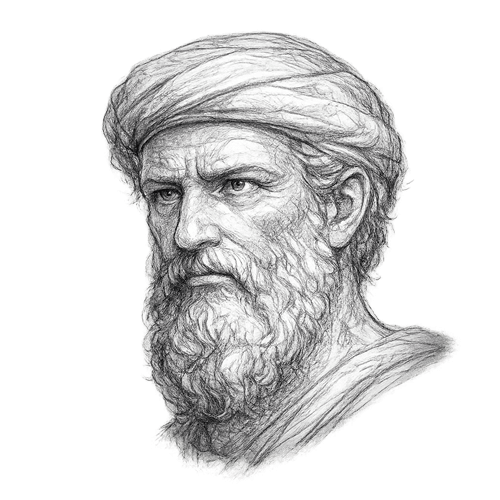
Thales traveled to the Nile Valley, where he was fascinated by how the Egyptians measured their land. He was the one who "imported" this practical knowledge to Greece, transforming it into universal logical laws.
The Eclipse of War
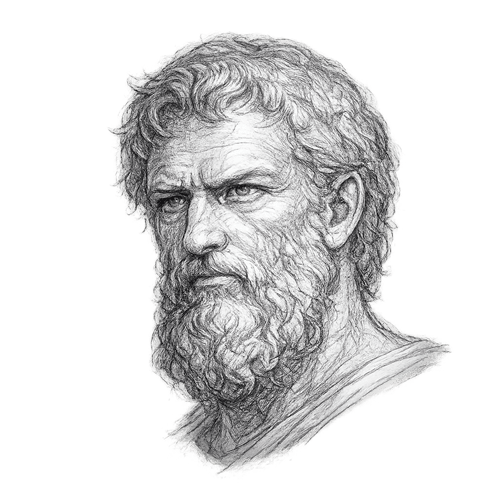
During a battle between the Lydians and the Medes, day turned into night. Thales had predicted this solar eclipse—an event that forced peace and proved that the heavens follow rules, not divine whims.
The Milesian School
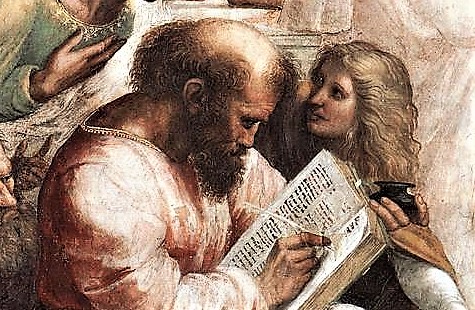
He founded the first institution of rational thought in history. There, knowledge ceased to be a sacred secret and became an open debate between master and students.
At an advanced age, overcome by heat and fatigue, he passed away while attending athletic games. And although his personal life remains shrouded in mystery—some say he had a son, while others claim he remained single—his method survived: the conviction that the universe is not a whim of the gods, but a comprehensible system.