Characteristics of tellurium
Its main features are as follows:
- Its atomic number is 52.
- The atomic mass of tellurium is 127.6 u.
- The atomic symbol with which we find it in the periodic table of the elements is the Te.
- Has a melting point of 450° C.
- Its boiling point is 988° C.
- It has a density of 6.24 g.cm-3.
- Its electronic configuration is [Kr] 4d105s25p4.
- He belongs to period 5 of the periodic table, in group 16.
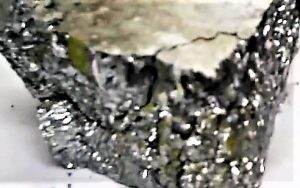
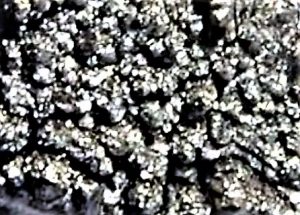
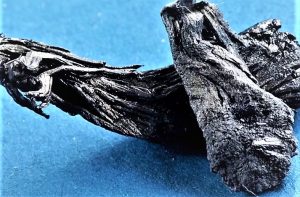
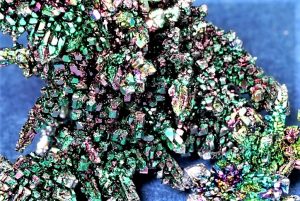
- Its color is silver and whitish.
- It is one of the best-known metalloids that exist.
- In its crystallized state it can be easily pulverized.
History
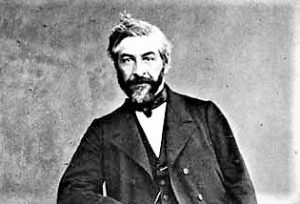
The word tellurium comes from the Latin word “tellus” which means “Earth” and was given in honor of the Roman goddess Tellus, who personified the Earth in Latin mythology. The tellurium element was discovered in 1783 by Franz Joseph Müller von Reichenstein in Sibiu, Romania. This scientist was very curious about a mineral that had been found in a mine near Zalatna, which had an incredible metallic shine and which he suspected was antimony or bismuth found in pure or native form. Preliminary research did not show that this mineral was antimony or bismuth. Over a period of three years, Müller devoted himself to researching the mineral and was able to demonstrate that it contained a new element. He published his findings in a diary and went almost unnoticed. In 1796, he sent a sample of the element to Martin Klaproth in Berlin, who finally confirmed the findings. Klaproth produced a pure sample and decided to give it the name tellurium. Interestingly, this was not the first sample to pass through his hands. In 1789, another sample had been sent by a Hungarian scientist, Paul Kitaibel, who had discovered it independently.
Who discovered tellurium?
Tellurium was discovered by Franz Joseph Müller von Reichenstein in Romania, in 1782.
Properties
Among the atomic properties of tellurium we can mention that it has a total of 52 electrons distributed as follows: In the first layer we find 2 electrons, in the second 8 electrons, in its third layer we observe 18 electrons, in the fourth, 18 electrons and in the fifth layer it has 6 electrons. It is part of the group of elements known as metalloids or semimetals and have intermediate properties between metals and non-metals. It is an electricity semiconductor and in its natural form is in solid state. It constitutes approximately between 10 – 9% of the igneous rock that we can find on the terrestrial surface. Sometimes it can be found as a free element or associated with selenium. It is possible to find it as sylvinite telluride, which is called graphic telluride, or as nagiagita or black telluride. Another form in which we can find the telide are the hessite, altaite, coloradoita and teluros of silver and gold.
What is tellurium for?
Tellurium is a mineral that is often used as an additive for steel and is usually alloyed to aluminum, copper, lead or tin. It is also added to lead to improve its durability and corrosion resistance. When added to rubber, it has the ability to accelerate the curing process and makes the product less susceptible to aging and less likely to be affected by oil, which softens normal rubber. It is mainly used in the electronics industry, for its conductive properties, in the manufacture of compact discs and in thermoelectric devices. In steel and copper machines and in glass coloring.
Where it can be found?
Sometimes it can be found in its elemental form and other times as gold tellurium. They are the only chemical compounds of gold that can be found in nature. It is produced mainly in the United States, Peru, Canada and Japan.