About Protestant Reformation
The reform consisted of a movement against the pope and his power over Catholic Church. It was driven by religious, politicians and important intellectuals who sought to interpret medieval doctrines from the point of view of the Holy Scriptures.
It involved Luther’s rejection of the sacraments of the time that included indulgences; for him, gospel was a matter not to be commercialized. There was then a crisis within the church as there was continual criticism of corruption and lack of mercy.
With this rebellion, Orthodox leaders proclaimed themselves as the only ones who had the Christian truth and began to persecute those who were against and, at the same time, groups were formed against the medieval Christian heritage fighting to restore the church. This situation caused the church in Europe to divide, those who supported the pope and those who did not, and the latter began to call themselves Protestants.
Characteristics
The main characteristics of the Protestant Reformation are as follows:
- One of the reasons for the Reformation was the creation of the Anglican Church.
- It was claimed that salvation could be obtained through faith.
- It criticized the sacraments of the Catholic Church.
- For them, only baptism and the Eucharist were sacraments.
- It thought that civilians should have authority over the policies of the Catholic Church.
- It was a threat to Rome.
Backgrounds
The Reformation of the sixteenth century did not happen without having antecedents. Reformers within medieval church such as St. Francis of Assisi, Valdes, Jan Hus, and John Wycliffe addressed aspects of church life in the centuries prior to 1517. In the sixteenth century, Erasmus of Rotterdam, a great humanist scholar, was the main advocate of liberal Catholic reform that attacked popular superstitions in the church and urged imitation of Christ as the supreme moral teacher.
These figures reveal a constant concern for renewal within the church in the years before Luther published his Ninety-five Theses at the door of Castle Church, Wittenberg, Germany, on October 31, 1517, All Saints Day Eve: the traditional date for the beginning of the Reformation.
At that time, there were many moral and ecclesial abuses, and the church was concerned only about managing resources and goods. The people of the villages wanted religious changes, and more mercy for the people.
History
The story begins in 1517 when Martin Luther challenged the Catholic Church and questioned the Pope’s authority through a document called “The 95 Theses“. There was already a deterioration of the Catholic Church at spiritual and institutional level since the Late Middle Ages and many people advocated a profound reform of the Church to recover the doctrinal aspects of early Christianity, to put an end to the abuses and corruption of the ecclesiastical hierarchy.
In 1516 and 1517, Johan Tetzel, a Dominican friar commissioned papal indulgences and was sent by the Catholic Church to Germany to sell indulgences (reduction of penalties for forgiveness of sins) and raise money for the reconstruction of St. Peter’s Basilica in Rome.
Luther protested this practice of selling indulgences in a letter sent to Albert, Archbishop of Mainz and Magdeburg on October 31, 1517, the 95 theses. For Luther, forgiveness was only a privilege of God. The sale of indulgences and absolutions could not be permitted. Christians were to earn their salvation by following Christ and not by buying indulgences.
Luther was followed by Calvin and Ulrich Zwingli. After Luther’s excommunication, Calvin’s writings helped fuel the movement in Germany, Switzerland, Scotland, Hungary, and the rest of Europe. Protestant groups such as Lutherans, Calvinists, Presbyterians, Anglicans, and Anabaptists began to develop.
When was the Protestant Reformation?
It is now 500 years since the Protestant movement began, which caused a change in Christianity forever. On October 31, 1517, Martin Luther made public his criticism of the Catholic Church and its power center in Rome by launching the reform.
Where it began
The Protestant Reformation began in Germany during the 16th century where the cities were very rich, and the bourgeois were interested only in the reform of the Catholic Church.
Precursors
The main precursors of the reform were:
- John Wiclef and John Huss
- Martin Luther in Germany
- John Calvin in France
- Ulrico Zuinglio in Switzerland
- Henry VIII in England
Causes of the Protestant Reformation
The causes that drove the reform are several, the high ecclesiastical hierarchies lived full of luxury and wealth, the clergy had very little formation and the ecclesiastical positions were generally bought by people who had no religious vocation and only wanted economic benefits and did not take into account the misery in which the settlers lived.
In 1515, Pope Leo X gave the order to preach new indulgences with the sole objective of building the Vatican of St. Peter. There were preaching of heretical doctrines that undermined the morals of the church and a broad and deep criticism against humanism.
Consequences
Some consequences of the Protestant Reformation were:
- The church lost power and wealth.
- Political, religious and cultural independence was achieved in several regions of Europe.
- Medieval authority was destroyed by liberating trade from church restrictions.
- Humanist education was extended.
- Religion ceased to be a monopoly.
- There were different religious wars throughout the country.
Principles
The principles of the Protestant Reformation are as follows:
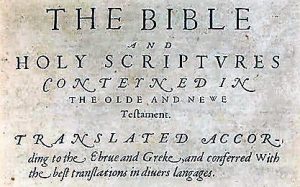
- SCRIPTURE ONLY: The Church was to return to the Scriptures and be governed solely by them, rejecting the authority of any religious leader who contradicted biblical principles.
- FREE ONLY: Salvation was an undeserved gift given by God and the works of men had no merit in salvation. God saves sinners to the praise of the glory of His grace.
- FIDE ONLY: The instrument of justification is faith, through faith, the sinner is imputed the righteousness of Christ, because His sacrifice was vicarious, that is, in substitution of believers.
- SOLI DEO GLORIA: God is the only one deserving of glory, honor and praise. The true gospel must be Theo-centric and what matters is to know God, enjoy Him and glorify Him with everything we do.
- SOLUS CHRISTUS: Christ is the only way to the Father, the only mediator, there is no other means of salvation, there is no salvation apart from Christ, no one can be saved unless he believes with genuine faith in Jesus Christ.
Importance of the Protestant Reformation
The reform was of great importance in countries where it developed while Catholic countries lived in obscurantism, Protestant countries came out of ignorance, giving importance to reading and studying the Holy Scriptures. It created a sociological revolution and work began to be dignified, sex was seen as the expression of God to form a family, knowledge freed us from the bonds of superstition, and freedom of conscience became an insurer of coexistence.
It produced prosperity while Catholic countries lagged behind living in ignorance and illiteracy.