What happened in the Paleozoic era
The Paleozoic era was an era of transit between the different forms of primitive life that existed, between vertebrate animals and invertebrates, of marine life and land, which was conquered by plants and animals. At this time, invertebrates evolved and grew in number. During the first years, sea life was limited to small animals, but then, vertebrate fish began to appear, which were fish covered with bony shells.
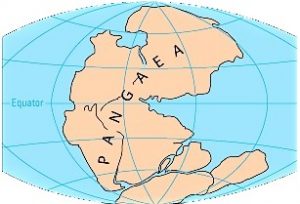
The first vegetables appeared on earth as ferns and conifers, and the atmosphere reached the oxygen levels we have today. Insects, amphibians and reptiles made their appearance, and there was great activity geologically speaking. Pangea began to separate and the lands emerging from the process were surrounded by sea.
Characteristics of the Paleozoic era
Some important characteristics of the Paleozoic era are mentioned below:
- In the Paleozoic Era, sea life grew and changed.
- Plants evolved, but still had no leaves or vascular tissue to extract water and nutrients.
- Ferns appeared, as did the first trees.
- Many of the animals began to develop skeletons and shells.
- Animals and plants managed to conquer the land by leaving their marine life behind.
Periods of the Paleozoic era
The Paleozoic era is divided into five different periods:
- Cambrian Period: Life at this stage was at sea and did not exist on land. Oceans were shallow and large invertebrates and multicellular animals with exoskeletons, such as shells and snails, emerged. Algae and lichens dominated the earth. Thanks to oxygen in the atmosphere there was a proliferation of plants.
- Ordovician Period: The seas withdrew and with it, land was exposed, the continents approached forming mountains. There was great volcanic activity and the first vertebrates
- Silurian Period: There was life on land and water, and the first animals emerged. The first plants with vascular systems appeared and atmospheric oxygen reached today’s levels. There were ferns and plants with seeds.
- Devonian Period: Warm weather and rains predominated in this period. Fish acquired adaptability to fresh and salt water, and the first primitive sharks, starfish and sponges emerged. Plants began to have roots and stems and reproduced through spores. The first forests originated in this period.
- Carboniferous Period: There were great movements of the earth’s crust, the climate became more humid, creating swamps where plants began to diversify and grow. Amphibians spread and reptiles were born.
- Permian Period: Reptiles similar to lizards emerged, which were totally land animals and some were semi-aquatic. Vegetation was abundant and there were large earthquakes causing continents to emerge from the seas.
Weather
Because plant and animal life had not fully evolved, it has been difficult to find climate information in continental fossil records, so the climate was considered oceanic and temperate, and had almost no seasonal differences. It is believed that at the beginning of the Silurian period there was the first great extinction due to the great glaciation that occurred.
Animals of the Paleozoic era
New aquatic life forms, such as algae, corals, mollusks, sharks, emerged. The first insects emerged at this time as did the echinoderms, although there was a massive extinction in that era. There was the Cambrian explosion, which suggested that animals had evolved by creating improvements in their systems.
Plants
During the Ordovician period, temperatures increased, and humidity increased, creating an atmosphere rich in carbon dioxide, facilitating the plant growth and the colonization of the continents by plants. The first vascular plants with rigid stems appeared. Large forests with large trees and swamps also emerged.
Volcanic activity
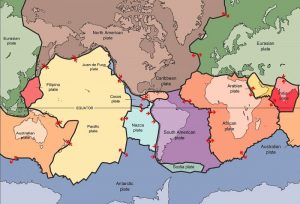
Volcano activity was very intense during the Paleozoic era, giving rise to new lands through land tectonic plates movement. Through telluric movements, the lands began to elevate giving rise to mountains and large ferns forests.