Characteristics of the oceanic ridge
The main characteristics of the oceanic ridge are the following:
- It can reach heights of between 2,000 and 3,000 meters.
- It is a form of mountain ranges that travel great distances that are submerged in the depths of the sea.
- Their formation is due to the collision of the tectonic plates.
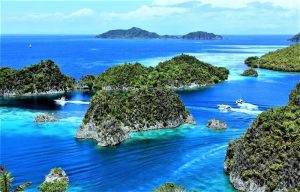
- The volcanic ridges of the oceanic dorsal are responsible for the formation of islands.
- When the ridges protrude from the water, they allow the development of a wide range of plant and animal
Structure
They are formed by great elevations of earth, approximately from 2000 to 3000 meters. Their relief is quite rugged, has broad slopes and several ridges characterized by a large cleft that crosses them longitudinally, which are known by the name of sinking valley or rift. As one advances to the sides of the oceanic dorsal the thickness of the volcanic crust increases, and the seismic activity is much greater. Between the boundaries of the plates there is lava that ascends to the surface, cools down and then solidifies. Several fumaroles can also be found on the ridges of the ridges, from which a vapor rich in minerals is expelled. These compounds play an important role in the proper maintenance of the composition of seawater.
Formation of the oceanic ridge
The earth’s crust is divided into several plates that are floating in magma. These plates can be found at the bottom of the oceans and are in constant motion. This situation causes them to collide with each other and accompanied by volcanic activity cause them to separate. Each time there is a collision, there is an elevation of terrain. It happens that, in these zones, being under the sea, when the magma that emerges solidifies giving origin to a dorsal, a mountain range that manages to extend by the edge of the tectonic plates. The oceanic mountain ranges can generate the formation of islands and this process is repeated and again with the passage of time. Sometimes the oceanic ridges manage to get out of the water and in this way allow the flora and fauna to develop. There are many formations of ocean ridges along the ocean, but it is worth mentioning that the most important are those found in the Pacific Ocean and those that cross the Atlantic Ocean. The formation of the ridges is a very slow process that takes many years, in simple terms, it is evolution and given that the core of the Earth will never cool down, the process cannot be altered or stopped permanently.
Types
There are two types of oceanic ridges that are:
- The Atlantic-type or slow dorsal whose expansion speed is approximately between 0.5 and 4 centimeters per year. Along these slow type ridges, we can find a central depression known as rift, a structure that is limited by blocks that have been raised by the action of normal faults. There is quite intense seismic activity and magma is produced, but in small quantities. Hydrothermal activity is very low and thermal abnormalities are slow.
- The Pacific-type or fast oceanic ridges have an expansion velocity of more than 5 centimeters per year. They do not have valleys, but they have a quite resistant dome. The seismicity is shallow, less than a kilometer and the magma chamber is permanently found. The access to the magma is continuous and this is the reason for its rapid expansion. It has a lot of hydrothermal and seismic
Examples of oceanic ridge
- Eastern Pacific Ridge
- Dorsal de Chile
- Galapagos Ridge
- Scottish Ridge
- Dorsal Gakkel (Arctic backbone)
- Antarctic-Pacific Ridge
- Kolbeinsey Ridge (Northern Iceland)
- Dorsal of Reykjanes (South Iceland)