What are the numeral systems for?
The main objective of the numeral systems is to count the different elements of a set. Through them, we can build all the valid numbers within the number system. Its purpose is to represent numbers.
Characteristics of numeral systems
Among the main characteristics we can mention the following:
- Each numeral system is characterized by its base.
- The numeral systems have a base or set of symbols that allow to represent the different numeral quantities.
- They have a number or quantity that is formed by the juxtaposition of the different elements.
- Each element within the numeral system has a weighted value.
- The number 0 expresses or denotes the absence of a given quantity.
- It is a positional system.
- They are composed of digits.
Origin
To discover the origin of numbers we must transport ourselves to the Egyptians, who were the first inhabitants of the earth to have a decimal system, known at that time as the hieratic numeral system.
History
Since antiquity, man has found himself in the need to count things in order to achieve adequate control. This was one of the main reasons why man invented a numbering system. Throughout history, the base 10 was the most used, however, there was also the Babylonian numeration that used a range between 10 and 60, and the Mayas, who used numbers between 20 and 5. It has been approximately 5000 years since civilizations began to count and use units, hundreds, tens, etc., varying the way of writing numbers.
The oldest numbering systems are Greek, Ionic, ancient Slavic, Cyrillic, Hebrew, Arabic, Georgian, etc. The step from counting manually to writing numbers took place approximately 4000 years before Christ. A rudimentary system of cuneiform symbols was created to represent some numbers that were later adopted by the Sumerians of Lower Mesopotamia, who were responsible for creating the oldest numeral figures in history. The birth of the Egyptian numeration was based on the repetition of symbols and the succession of these in ascending or descending order and had a base of 10, tens, hundreds, thousands.
Types of numeral systems
There are two types or two major classifications of numeral systems:
- Positional: it is the type of numeral system in which the value that has a number changes according to the position in which it is, inside the figure of the number. The positional system is also subdivided into various types, for example:
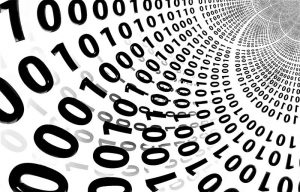
- Binary system: it only has two numeric values, the 0 and the number 1.
- Decimal system: it is the system that has a base of 10 and ten digits that go from the number 0 to 9.
- Hexadecimal system: this system requires 16 different digits to express or represent a number.
- Octal system: it is the system that has eight digits to express different quantities.
- Non-positional: This is the numeral system in which the number does not depend on the position within the number. For example, we can mention the Roman numerals.
Application of numeral systems
Numeral systems have the following uses:
- To count and express the results of a measurement and to perform different calculations.
- They can be used to codify information.
- They are used in the metric system.
- They are used in the field of physics to show scalar and derived magnitudes.
- The octal system is used in computation to group bits.
- The binary system is also used in computing and electronic devices.
Operations
With the numeral system you can perform arithmetic operations, addition, subtraction, multiplication and division. Each numeral system has its own way of performing each of these operations.
Importance
The numeral system is of great importance for our daily life because through it, we can represent all the numbers and work with them to solve a series of mathematical problems that may arise day by day. It is important in the field of computation, electric and metric, for the realization of measurements.
Examples
- Binary System: 0, 1
- Decimal System: 0, 1, 2, 3, 4, 5, 6, 7, 8, 9
- Hexadecimal System: 0, 1, 2, 3, 4, 5, 6, 7, 8, 9, A, B, C, D, E, F