About the First Industrial Revolution
The First Industrial Revolution was a movement full of technology and science that allowed man to possess new means and elements to progress that made production, cultural and economic development of society in general more viable. It consisted of a series of changes in the production processes due to the introduction of innovative procedures that managed to increase production and resources in a more efficient way.
Characteristics
The main characteristics of the First Industrial Revolution were the following:
- Manual work is replaced by industrial factory
- The railroad was invented, and it was the revolution in means of transport.
- The steamboat was created that allowed the transportation of larger ships at higher speed.
- Roads and canals were built to improve transportation.
- There were great technological changes that were the basis of industrial production.
- There was private investment and massive production of goods.
- There was low cost in production thanks to machines.
- Low cost of labor.
- The new imperialism arose, which was based on economic conquest through the sale of industrial products.
- Creation of the mechanized factory
History
The 16th century saw advances in trade, financial methods, banking and navigation, advances that were affected by epidemics, constant and long wars and famines. From the middle of the 18th century, Europe moved away from the rest of the world and began the foundations of the future industrial society due to the development of heavy industry and mining.
The coalition of traders and farmers raised productivity, causing a demographic explosion, the transition from a manual agricultural economy to a commercial and industrial one, whose ideology was based on rationalism, reason and scientific innovation.
Stages of the First Industrial Revolution
There were two stages that marked industrialization, called the First Industrial Revolution which was characterized by regular population growth and the creation of abundant workforce. These stages were:
- First stage: mechanization initially occurred in the manufacture of wool, then spread to the metallurgical sector, transport, agriculture and other sectors of the economy. The machines were invented, the energy of the mineral coal was taken advantage of transforming it in mechanical energy so that the machines worked. Industrial products were sold and produced to the world, and the colonial system expanded.
- Second stage: it was characterized by scientific and technical progress that developed the means of production, labor, and organization. Production was improved with the introduction of electricity and oil, steel and new forms of work. Financial capitalism, lighting and metallurgy
Where it was developed?
The First Industrial Revolution developed in the kingdom of Great Britain, from where it later spread to Western Europe and Anglo-Saxon America, ending between 1820 and 1840.
Causes
Several factors in the UK led to the changes of the First Industrial Revolution, which then spread to the rest of Europe:
- Parliamentary Monarchy: it created the division of powers, guaranteeing individual freedom and legal security to give rise to the entrepreneurial class.
- Availability of workforce: community lands were taken over by nobles evicting peasants.
- International trade: English naval capacity prevailed over world trade, opening markets and finding new consumers.
Consequences of the First Industrial Revolution
Among the main consequences of the revolution we can mention that there were enormous demographic movements from the countryside to the cities, which greatly reduced the peasant population. Two new social classes were created: the proletariat, which was a social sector that had few economic resources but did not own means of production, was an urban population where extreme poverty existed; and the industrial bourgeoisie, which was a sector of society that accumulated wealth due to the exploitation of the proletariat.
With population growth there was a sharp drop in mortality and an increase in fertility. There was greater exploitation at work and the workers’ movements began to develop, thus creating trade unionism.
Social changes
With the revolution there was a notable increase in the demographic indexes changing the mortality and birth rates, because there was better food, more hygiene and medicines. The use of goods is encouraged and the different means of transport such as railways and automobiles, telegraph, radio and comfort in general are modernized.
There was a displacement of the population towards the cities that also generated the movement to other continents such as North and South America. Imperialism and the bourgeoisie emerged, being this social class the one that possessed the political and economic power displacing the aristocracy.
The working class developed which had to endure inhuman working, economic and social conditions, but this situation led to the creation of socialist currents and the organization of trade unions.
Inventions
During the revolution there were inventions that made possible the emergence of factories, the acceleration of production and profits. Among the machines that were invented we have:
- Steam engine
- Steam locomotive
- Steam boat
- Hargreaves Machine
- Hydraulic Loom
Energy sources
The energy sources that were used during the First Industrial Revolution were:
- Oil: served as fuel for cars and engines and played an important role in the chemical industry.
- Electricity: essential for the illumination and transmission of electromagnetic signals as in the case of the telegraph.
- Coal: substituted wood and was used in domestic consumption.
Transport
The main means of transport developed in the First Industrial Revolution were the following:
- Locomotive: Richard Trevithnick, developed the first locomotive that worked to tow, by iron rails, wagons that were usually pulled by horses, and was used to transport iron.
- Ships: they were propelled by propellers. During the second half of the 19th century they reached a load capacity of 2,000 to 3,000 tons and were faster.
Representatives
Among the main representatives of the first Revolution we can mention:
- Thomas Robert Malthus
- James Watt
- Adam Smith
- David Ricard
- John Stual Mill
- Count of Saint Simon
- Robert Owen
- Charles Francoise Fourier
Advantages of the First Industrial Revolution
With the First Industrial Revolution there were new work mechanisms, the emergence of industry made work more productive thanks to the mechanization and division of mimes. Factories and workshops developed the industry taking advantage of new forms of energy.
It arose the invention of new machines that promoted technological progress, mainly in the textile industry, the railway appeared, and also the steamship and the steel industry. The means of communication and transport improved considerably, and the telegraph and telephone were invented.
Disadvantages
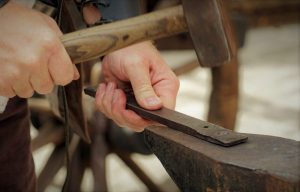
Among the main disadvantages that the revolution brought with it, there was competition between industrial production and the self-employed. The artisans could no longer work at home but had to go to the factories for an established time and had no control over the profits of what they did.
New social classes such as the bourgeoisie and the proletariat were formed. There were many injustices against the working class as companies paid low wages and man’s work had been replaced by machines. Excessive working hours and fines made workers’ lives a misery.
There were constant migrations to the city because the peasants decided to leave that kind of life, and this led to a series of epidemics and diseases such as cholera.
Importance
Its importance lies in the creation of new machinery and tools to facilitate production, make it more abundant and cheaper. The social changes were of great importance for the world and society, and we continue observing these changes to this day. Socio-economic change was of great importance because it consolidated the social division between those who produced and those who had the work force. Technology was increased, machines were created which, although positive, also had many negative aspects. Industrial production and the growth of cities were increased.