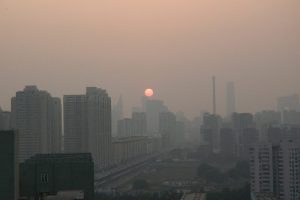
Visual pollution can be in our environment without us realizing how much it can affect us and the consequences it generates through visual over-stimulation that stuns and distracts people’ concentration on the roads or streets of very commercial cities.
Light pollution is one of the most obvious examples of visual pollution and its presence in many advertisements has contributed to traffic accidents and headaches.
Causes of visual pollution
There are different causes of visual pollution. Among the most frequent we can mention:
- Excessive use of illuminated billboards and animations on roads.
- Excessive use of television advertising.
- Garbage agglomerated in public spaces.
- Constructions or distortions in natural environments that scare away the fauna of that space.
- Networks of electrical wiring placed in the cables in a disorderly manner.
- Urban graffiti.
- Air traffic.
- Deteriorated buildings.
- Parabolic antennas.
- Pipes in poor condition and external wiring of buildings.
Effects
Although it is believed that this over-stimulation generated by visual pollution only affects the area in which it is found, in reality its negative impact permeates other beings. In the case of human beings, over-stimulation in sight generates visual problems and stress in the eyeball because it needs to work harder to assimilate the information. This type of pollution can produce a deterioration in health, causing anxiety, anguish, headaches, nervousness and psychological stress in people.
Also, the amount of visual information on streets and highways can cause distractions and traffic accidents that can put the lives of drivers and pedestrians at risk.
On the other hand, the environment suffers from visual pollution and its consequences can be very severe for fauna and flora. Many species affected by visual pollution have had to migrate from their habitats or have died as a result of deforestation, the construction of signs and electric towers.
In light pollution, which is part of visual pollution, effects have been generated in the night sky, they do not allow the stars and planets to be seen because of the excess light that comes from cities.
Prevention
Visual pollution can be prevented with a supervised use of outdoor advertising in order that it does not cause visual stimulus saturation in its public, the collection of solid waste from the streets to care for the aesthetics of open spaces, the maintenance of buildings, especially in the remodeling of deteriorated facades, tree cultivation in streets and avenues, reduce the excess of advertising on television and see it with a distance that does not tire the view. Turn off high beams when they are not needed on the road. These are some of the precautions that can be taken in some cities where visual pollution is present.
Types of visual contamination
Types of visual contamination include the following:
- Billboards.
- Air traffic.
- Wired electricity poles.
- Television antennas.
- Satellite dishes.
- Garbage or rubbish dumps.
- Deteriorated buildings.
- Electricity distribution networks.
- Excessive traffic signs.
- Light pollution generated by excess lights.
Examples of visual pollution
Among the most obvious examples that can be mentioned, we will cite the spaces where:
- The excess of light at night does not allow us to see the stars in the sky. This often happens in some capitals of developed countries
- The excess of luminous fences with animations and movements on motorways and roads. An example of this can be the city of Vegas.
- The use of computers or televisions very close to the eye. This leads to eye fatigue and headache.
- The agglomeration of waste in the streets. This can be seen in the misery belts of Brazil.
- Vehicle high beams can also generate visual pollution. This is very common on highways and highways in many countries.