Stratosphere’s characteristics
The main characteristics are the following:
- The bottom of the stratosphere is located 10 km above the ground at mid-latitudes.
- The upper part is located at an altitude of 50 km.
- It is quite dry and the air in it contains a little water vapor.
- There are very few clouds.
- It has a lack of vertical convection so the materials that reach it can remain there for a long time.
- It has a circulation known as Brewer-Dobson which is a unicellular circulation.
- Ruptures of planetary waves take place in it.
- Different types of waves are produced by the atmosphere that influence the stratosphere.
- Its temperature increases with altitude.
Stratospheric’s composition
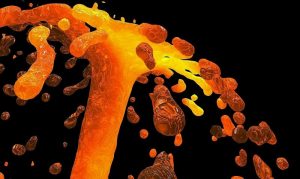
The main compound we can find in the stratosphere is ozone. Approximately 85-90% of the total ozone in our atmosphere is found in this layer. This gas is formed by photolysis of the oxygen that already exists in the stratosphere. The majority of gases other than ozone that manage to reach and enter this layer come from the troposphere because of their long life or, because these gases have been released through volcanic eruptions, which release large amounts of gases and some particles that go directly into the stratosphere. Therefore, we can say that the main compounds we find in the stratosphere are: nitrogen oxides, nitric acid, sulphuric acid, silicates, ozone and halogens.
Height
Its bottom is located about 10 km above the ground when we are at mid-latitudes. The upper part is at an altitude of 50 km measured in the same way. The height of the bottom of the stratosphere varies and depends on the latitude. The lower limit can be up to 20 km and is located near the equator and can reach a distance of 7 km at the poles during the winter.
Temperature
The temperature of the stratosphere ranges from approximately –260 degrees to about 153 degrees Celsius, however, its thermal gradient may behave in different ways according to the type of atmosphere that may be polar, tropical or mid-latitude.
Stratosphere’s function
The main function of the stratosphere lies in the different molecules of ozone and oxygen found in it. These absorb the ultraviolet light from the sun, providing the earth with a shield that prevents this radiation from reaching the surface, causing serious damage. The protective role played by the ozone layer in the upper atmosphere is so vital that scientists believe that life on earth probably would not have evolved since ancient times, and that, without it, it could not exist today.
Ozone layer and its importance
The ozone layer is a deep layer located in the Earth’s atmosphere that contains ozone, which is a natural molecule containing three oxygen atoms. These ozone molecules form a gaseous layer in the upper atmosphere, in the layer known as the stratosphere. This lower region of the stratosphere that contains a relatively higher concentration of ozone is called the Ozonosphere located 15-35 km above the earth’s surface.
The ozone layer forms a thick layer in the stratosphere, this is the layer that surrounds the earth and has a large amount of ozone. It was discovered in 1913 by French physicists Charles Fabry and Henri Bouisson and has the ability to absorb almost 97-99% of the ultraviolet radiation from the sun’s rays, which can have devastating long-term effects on humans, plants and animals. The ozone layer is responsible for protecting living things on earth against the strong ultraviolet radiation from the sun. These rays are harmful as they can increase the risk of fatal disorders such as skin cancer, cataracts and damage the immune system of living beings and are also capable of destroying individual cell organisms, terrestrial plants and aquatic ecosystems.