Characteristics of ruthenium
- Its symbol and atomic number are respectively: Ru, 44.
- Its atomic mass is 101,07 u, and its electronic configuration is [K Kr]4d75s1.
- Its electronegativity is 2.2 and its oxidation state is 2, 3, 4, 6, 8.
- It can be found in solid With a density of 12370 kg/m3.
- Its melting point is 2607 K (2334 °C) and its boiling point is 4423 K (4150 °C).
- It plays no biological role in nature.
History
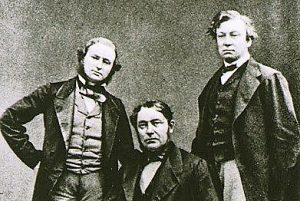
The name of the element comes from the Latin word “Ruthenia” which means Russia, since platinum minerals originated in the Ural Mountains in Russia. It was thought at first, that the initial discovery of ruthenium had occurred in 1828, when the Swedish chemist Jons Jacob Berzelius and the Russian chemist Gottfried W. Osann examined the residues of the raw platinum minerals after dissolving them in royal water, which was a concentrated solution of hydrochloric and nitric acids. Osann believed that there were three new metals in these wastes, which he called pluranium, polynium and ruthenium. Berzelius, however, did not believe much in this new theory. Sometime later, in 1844, in Kazan, Russia, Karl K. Klaus repeated Osann’s work to try to clarify the results that had been obtained. At that time, he managed to prove that there was only one new metal present in the residues. He thus decided to keep Osann’s ruthenium name for this new metal.
Who discovered ruthenium?
It was discovered by the chemist and scientist Karl Ernst Claus in 1844, who doing some experiments managed to observe that the platinum oxide contained a new metal, obtaining through his tests, six grams of ruthenium from the part of platinum that is insoluble in royal water.
Properties
- Ruthenium is suspected to be a carcinogen and its compounds produce large spots on the skin. Ruthenium tetroxide (RuO4) is considered a highly toxic chemical.
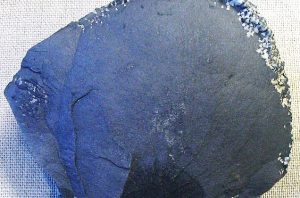
- It is a very rare white metal, its consistency is completely hard, glossy, very brittle, and has a silvery white color that cannot be stained at room temperature.
- As is normal within transition metals, ruthenium can exist in many oxidation states, the most common being oxidation states II, III and IV.
- Metal is not affected by air, water and acids.
- It is capable of reacting with molten alkali and halogens and can oxidize explosively.
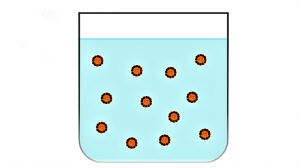
- It has catalytic properties; for example, hydrogen sulfide can be divided by light in the presence of an aqueous suspension of cadmium sulfide particles charged with ruthenium dioxide.
What is it for?
Some of the applications that can be given to it are the following:
- As it is extremely effective in hardening palladium and platinum, it is regularly used in the alloys of these two metals, which in turn are used to make electrical contacts because they have a high resistance to wear.
- It can be incorporated into titanium alloys to increase corrosion
- Like other elements of the platinum group, it can be used as a catalyst in various processes.
- Hydrogen sulfide, H2S, can be broken down by light by using ruthenium oxide in an aqueous suspension of CdS particles, which can be very useful in the removal of H2S from petroleum refineries and other industrial processes.
- Some modern studies suggest that some compounds that ruthenium possesses may have an antitumor effect.
Where it is found?
It can be found freely in nature and is often found with other metals that belong to the platinum group. Commercially, it is obtained from pentlandite, which is a sulfur of iron and nickel, which contains small amounts of ruthenium. It can also be extracted from spent nuclear fuel; however, if obtained in this way, it will contain radioactive isotopes, which tends to have some risks. After obtained, ruthenium should be stored safely for at least ten years until the radioactive isotopes have decomposed.