History of rubidium
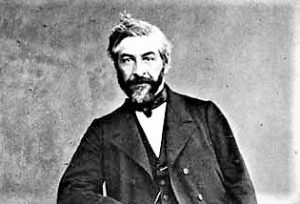
This metal was discovered in 1861 by German chemists. It was discovered in 1860 by the German physicist Gustav Robert Kirchhoff and the chemist Robert Wilhelm Bunsen, through the spectral analysis of Durkheim mineral water. The element was named after its characteristic red spectrum lines (from the Latin ‘rubidus’, dark red).
Characteristics of rubidium
It has a density / g of dm-3: 1532. Its molar volume/cm3mol-1 is: 55.79. As for its thermal properties we can mention the following characteristics:
- Thermal conductivity / W m-1K-1: 52.8
- Melting point / °C: 39.31
- Boiling point / °C: 688
- Melting heat / kJ mol-1: 2.2
- Vaporization heat / kJ mol-1: 75.7
- Atomization heat / kJ mol-1: 82.17
As for the ionization characteristics, we can mention the following aspects
- First ionization energy / kJ mol-1: 403.03
- Second ionization energy / kJ mol-1: 2632.62
- Third ionization energy / kJ mol-1: 3859.44
Physical and chemical properties of rubidium
Rubidium is an element that belongs to the group of alkaline metals. This group of elements is characterized because they have only one electron in their most external energy level and have a tendency to lose it, being this the form they have to form a mono-positive ion. This tendency that alkaline metals have is because they have a low ionization energy and their electronic affinity is very little. The state of rubidium in its natural form is solid.
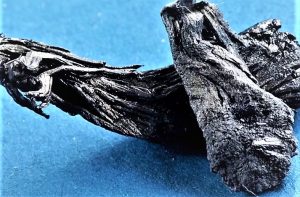
It is a silvery whitish chemical element and belongs to the group of alkaline metals. Its atomic number is 37, its symbol is Rb, its melting point is 312.46 degrees Kelvin or 40.31 degrees Celsius or degrees Celsius and its boiling point is 961 degrees Kelvin or 688.85 degrees Celsius or degrees Celsius.
It has a total of 37 electrons distributed as follows: In the first layer it has 2 electrons, in the second it has 8 electrons, in its third layer it has 18 electrons, in the fourth, 8 electrons and in the fifth layer it has 1 electron. Its melting point is 312.46 K and its boiling point is 961 K. It has an electrical conductivity of around 7.79-106S/m and a thermal conductivity of 58.2 W/(Km).
Uses and applications of rubidium
Rubidium is a highly reactive element and its color is usually silvery white. It is a relatively common element in the earth’s crust. The majority of it is extracted from lepidolite, this is a mineral that contains approximately between 0.3 and 3.5% of that element.
Rubidium actually has very few industrial applications. Some of its possible uses are the following:
- The manufacture of atomic clocks is made on the basis of rubidium because it has a very low cost. These atomic clocks are used for a variety of purposes such as in global navigation systems (GPS and GLONASS) and within telecommunications industry (mobile phone base stations and television stations).
- It is used in laser cooling, which is used to cool molecular and atomic
- Rubidium salts are used to make some types of glass and ceramic
- It is also used to remove traces of gases in vacuum tubes.
- An isotope of rubidium, Rb82, is used in certain types of medical imaging. This isotope is commonly used to detect and brain tumors to improve the medical image of the heart in overweight patients.
- This metal is used in the manufacture of photoelectric cells and serves to achieve the color purple in fireworks.
There are few real important applications of this chemical element. The spectral line that gives it its name is one of them, as well as the purple color of some fireworks. Its other applications have to do mostly with the fact that rubidium has a high vapor pressure.
Presence in food
It is a mineral that may be beneficial for the treatment of depression. Studies have recommended that the right amount for humans is 1 to 5 milligrams. However, there is no defined set of recommended daily allowance, as this element is a trace element. Rubidium is responsible for carrying nutrients to organs, but only in small amounts.