Characteristics of the percussion instruments
- They have the ability to produce different types of timbres.
- Easily adaptable to other musical instruments.
- They are usually made of wood or metal.
- Instruments created by bars, the smaller they are, the louder their sound will be.
- On instruments created from membranes, the larger they are, the more serious their sound will be.
- Their sound cannot be tuned.
- Are used to interpret only rhythms.
- Do not use staves.
- Sounds are produced by being hit with the hand or another type of device made for it.
History
Percussion musical instruments were the first instruments used in human history, basically since prehistoric times. At that time, these instruments were used to fill everyday aspects of life, such as hunting and games. Drums are found in almost every culture in the world and have existed since before 6000 B.C. Over time, they have been associated with ceremonies, sacred and symbolic. Scientists have managed to find during several expeditions, some clay drums and animal bones that were used for this purpose. When Constantinople was conquered by Turks, they began using some percussion instruments such as triangles and drums. They also played a very important role in medieval Europe and the Renaissance era. The drum and its relatives were used during wars, to send coded instructions to the soldiers.
Classification of the percussion instruments
Percussion instruments can be seen from two points of view, the musical and structural.
From the musical point of view we can classify them in:
- Defined intonation or height instruments, which are those that can produce a tone, such as timpani and bells.
- Indefinite intonation or indeterminate height instruments are those that cannot produce a specific tone sensation and their notes cannot be identified, but on the contrary produce noises, like drums.
From a structural point of view, there are three different types:
- Membranophones or membranes, which produce their sound through tight membranes such as the drum and the bass drum;
- Plate like cymbals
- Idiophone or of bars, that can produce sound based on the material of which they are made through its solidity and elasticity, tension membranes and strings, as the xylophone, lira and marimba.
Examples
Wooden percussion instruments
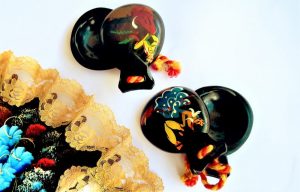
Its sound cannot be distinguished. Among the percussion instruments made of wood we can mention the castanets and percussion sticks that produce their sound crashing their parts; the maracas that have small components inside the instrument; and the guiro, made of cane with small grooves by which a stick of wood or another material is rubbed.
Metal percussion instruments
They are also idiophone instruments and as their name indicates they are made of metal. For example, we can mention saucers, gong, triangles, bells and bells.
With membrane
This group of instruments includes the instruments known as membranophones which produce their sound through tight membranes. Within this group we can mention the timpani, that can be tuned and produce certain frequencies and are a semi-oval box made of copper or bronze with a parchment membrane on it being held by a metal ring; the bass drum is a large drum that produces a well-defined bass sound.
Metal
They produce an indeterminate sound and some of their notes cannot be identified. Among them, we have cymbals or plates which have a circular shape with a leather or skin string in the center; the bell is usually hit by a clapper hanging inside; the triangle which produces a sound from the metal vibration of which it is made.
Without membrane
They are also known as idiophones. They have their own sound since they use their own body to produce it through vibrations, they do not use strings, membranes or air. They are generally made of wood, metal or stone. Among them we can mention castanets and xylophones.
African Instruments
Among them we can mention:
- Dum Dum: Formed by three different instruments made of skins united by strings that can suffer changes in tension. It produces different types of percussion tones and the instruments that make it up are called: the Dununba, the lowest; the Sangban the middle and the Kenkeni the smallest.
- The Bougarabou that can be played alone or in a group of four and is very similar to a conga.
- The shekere or calabash formed on the basis of a pumpkin with beads woven into a net that covers it.
Orchestra
An orchestra is a group of musicians who perform musical works by means of different instruments. The word comes from the Greek and has as meaning place to dance. The orchestra is made up of different groups of instruments such as strings, woods, metals and percussion.