Etymology
The word orogenesis is formed from words or roots of Greek origin and means “study of the formation of the mountains”. The word is composed of the prefix “oros” or “ὄρος” which means mountain, the suffix “gen” or “γένεσις” which means to produce or generate, plus the suffix “sis” which means action.
Orogenesis history
According to scientists, orogenesis has remained very homogeneous over time. Genetic orogeny processes have affected the formation of the earth since the knowledge of its existence. It is considered that the different processes that characterize the tectonics of the world, initiated the evolution of the planet and that have managed to maintain uniformly, both in intensity and mechanics. Its history is based on three different processes, which are those that have been responsible for the construction of the earth for more than 400 million years, these are:
- Caledonian Orogeny: they were a series of tectonic movements from which the Caledonian chain
- Hercynian or varicose orogeny: it occurred in different parts of the earth and the most important was the Caledonian folding.
- Alpine Orogeny: occurred in the tertiary period and is still in action. It is he who formed the Himalayan alpine
About orogenesis
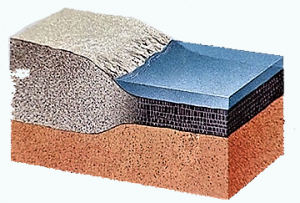
The orogenesis is a group of different processes that occur at the edges of the different tectonic plates that make up the planet and that by their movements give rise to mountains or mountain ranges. In the oceanic basins that limit the continents, a great amount of sediments accumulates, which through the convergent movements cause the deformation and metamorphism of the different materials that make it up. When one tectonic plate is inserted underneath the other, the earth’s crust thickens, and mountain ranges emerge. While this process takes place, a series of volcanic manifestations, mechanical or collision processes and mantles of thickening can occur.
How is the process?
Orogeny is the process of mountain formation and is produced by the deformation of different sediments found in a sediment basin. These sediments are fractured into pieces giving shape to the different types of relief of the earth. It produces a series of folded reliefs. The process occurs through three different steps: folding, which is the process in which soft materials are folded; failure, a process by which materials that have a harder consistency are broken; and dipping, a process by which materials move to their different positions. Orogeny tends to occur for a relatively short time and is capable of producing intense deformation. Regional metamorphism and magmatic activity are also often associated with an orogenic event.
Types of orogenesis
There are two different types of orogenesis that are:
- Thermal orogenesis: This type of orogeny occurs when one tectonic plate subdues underneath another. In these processes there are a series of magmatic and volcanic processes as a consequence of the plates colliding. According to this, thermal orogenesis has two different modalities:
- Island arches: consisting of archipelagos, volcanic islands and pits.
- Marginal ridges: they occur when by means of subduction the oceanic lithosphere is broken at the edge of the continents.
- Mechanical or collision orogenesis: occurs when tectonic plates drag a portion of the continent against another. The forces that intervene in this process are horizontal and mechanical and the volcanic processes are almost null. The plates subduction is necessary for the process to take place and implies a phase of thermal orogenesis before the collision of the continents takes place.