The Metal Age can be divided into three major parts, such as the Copper Age, the Bronze Age and the Iron Age. But it is important to say that this stage begins with the development of metallurgy in different continents as Europe, Africa and Asia.
Characteristics of the Metal Age
The Metal Age is divided into three moments and these are its characteristics:
Copper or Chalcolithic Age
- It develops between 6,500 and 2,500 B.C.
- Gold, silver and copper were the most used metals in prehistoric times.
- Metallurgy develops.
- Agriculture and cattle breeding are developed.
Bronze Age
- It takes place between 2,500 and 1,500 B.C.
- More complex societies are created than in Neolithic populations.
- Bronze was found in India, Iran, Armenia, Egypt and Sumerian.
- The Aegean Sea is an exclusive space for bronze trade.
Iron Age
- It develops from 1,500 B.C.
- This metal is used to make weapons and tools.
- The Hittites were the first to use iron in 1,300 BC.
- Being harder than bronze, new metallurgical techniques had to be developed to work it.
Metal Age stages
As mentioned above, in the Metal Age there are three stages. The Copper Age, the Bronze Age and the Iron Age.
The Copper Age is the first stage. During the Copper Age, man began to use copper, gold and silver in order to create tools for working the earth, forging weapons, pots and ornaments for funerary rites.
In the Bronze Age, the alloy between copper and tin was discovered to form bronze, a metal that is more resistant than copper. This era begins in South Asia and extends to North Africa. In this moment of history, the sedentary life is consolidated more than in the Neolithic.
The Iron Age is the third stage. Iron was previously known but being considered a precious metal was only used in its beginnings to make jewelry. It was believed that iron was a sacred metal because it came from meteorites that impacted the earth.
It is important to mention that iron is a stronger metal than the previous ones and was more abundant than the other known metals. This led to the adaptation of metallurgical work to this metal.
How did the Metal Age man live?
Coexistence in the Metal Age took place in villages that were gradually transformed into small towns protected by walls. They depended on the productivity of their lands for agriculture and livestock, their importance for religious development and their commercial access routes.
In these societies there were different social groups divided into six types:
- The bosses.
- Priests.
- The warriors.
- Blacksmiths, goldsmiths and merchants.
- The bakers, spinners or weavers.
- Cattlemen and farmers.
Tools in the Metal Age
The tools made during the Metal Age were axes, knives, war weapons, some vessels and other metal objects. Many of the tools created were also used for working in the fields, either for agriculture or livestock.
Art
Much craftsmanship developed in the Metal Age related to religious cults and social classes. Vessels, bracelets and some jewels were made of bronze for some chiefs or priests of the villages.
Economy
Agriculture, livestock and hunting play a fundamental role in the economy of the peoples of the Middle Ages.
It is important to mention that metallurgy, mining, handicrafts and commerce are also developed.
Architecture
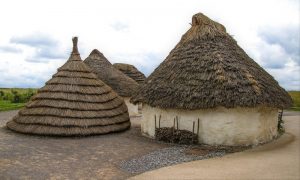
Metal Age architecture is made up of houses and religious monuments. The materials used were mostly stone, adobe and wood.
Houses were square, round or rectangular and were surrounded by fortifications with tall towers built with wood called talayots.
Megalithic monuments for religious purposes are still being built in the Metal Age and stone remains the main element in them. Among the religious monuments are the dolmen, the menhirs, the navetas. Many of these works are still preserved in some regions of Eastern and Western Europe.