Biography of Joseph Stalin
Yósif Vissariónovich Dzhugashvili, better known as Joseph Stalin, was a man dedicated to politics born in Gori on December 6, 1878. He established himself as a dictator of the Soviet Union, but before that he was the general secretary and president of ministers of the Central Committee of the Communist Party of the USSR.
His intimate life was a total polemic even on the verge of his death, but what was true is that he died agonically on March 5, 1953.
What he did?
Despite establishing a dictatorship, Joseph Stalin managed, at the price of innocent blood from the civilians of his own nation, to establish Russia with a political system which he had always wished for; a semi-feudal.
Thus, positioning it as an economic and military power, to the point of playing an extremely definitive role in the Second World War.
Youth
Stalin lived in a very grey environment during his childhood due to the smallpox attack in Gori, his hometown. His mother, when he was a teenager, forced him to enter seminaries and schools where his Marxist ideals were formed, and he began actively to fight against the Tsarist government.
Ascent to power
Among the facts that propel him to reach power are found:
- In 1912 he entered the Bolshevik committee through the Central Committee by co-optation.
- In 1917, because Lenin was in exile, through his position as editor of Prayda, he succeeded in attacking Kerensky’s provisional government.
- In April 1917 he was elected by vote to the Central Committee at the Petrograd conference, and in July they succeeded in ending the provisional government.
Dictatorship of Joseph Stalin
On April 3, 1922, he gets the most coveted office in the country, that of general secretary of the Communist Party Panruso, which took Lenin by surprise, but it was already too late. From this point, he managed to place his most reliable comrades in the elite positions of USSR government, thus completing total control of the organization and assuming its absolute power.
Action in the Second World War
Initially Germany signed a treaty with the USSR not to attack it, and to avoid any conflict on its borders, but this treaty was broken by Hitler invading Poland, which is why Stalin decided to mobilize their businesses in the heart of Russia and make a military advance called “Stalingrad” where it decimated and captured approximately 30% of the Nazis only at the beginning, later “joins forces” with the allies destroying Hitler on all sides.
Death
Already in his seventies, Joseph Stalin began to worsen strongly in his health, with symptoms such as memory loss, low energy and a constant headache. He went into a state of agony for several days until he suffered a severe heart attack that led to a coma, dying on March 5, 1953 at 10.20 at night.
Personality
For those who knew Joseph Stalin, they always claimed that he was of a quite strong character, he always liked to maintain order in the various situations in which he was involved.
Stalin was always an atheist, in the whole context of the word since he absolutely mistrusted all the men around him including his parents and children.
Physical characteristics of Joseph Stalin
Since he was a little boy, Joseph Stalin was a man of coarse constitution, with a medium complexion, his hair was light brown and the color of his eyes were brown. He had no physical attraction although he had many women.
Ideology
He was always moved by his ambitions for power and not by his revolutionary ideals, this was fully shown when he reached power and left aside all the ideals with which he made his way to reach his final goal.
Thought
He highlighted for his thoughts Lennin-marxist, demonstrating it in many of his articles as for example “Marxism and the national question”. He even succeeds in entrenching these thoughts even more in his party colleagues, allowing him more support to achieve his true objective.
Parents
His parents were:
- Vissarion Dzhugashvili, who was his father.
- Yekaterina Gueladze, who was his mother.
Relationships
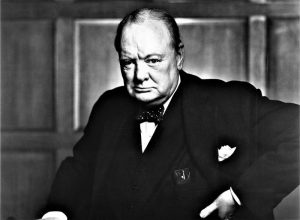
In spite of being one of the most repudiated men in history, he was very well connected with other good politicians extremely important to the history of the world such as Franklin Roosevelt, Sir Winston Churchill and Lenin.
Children
Joseph Stalin had children from different marriages, although none of them received more attention. These were:
- Yakov Dzhugashvili.
- Vasili Dzhugashvili.
- Svetlana Dzhugashvili.
Works
Among his most outstanding works are the following in chronological order:
- “Anarchism or Socialism?” (1907)
- “Marxism and the National Question” (1913)
- “The Foundations of Leninism” (1924)
- “Trotskyism or Leninism?” (1924)
- “October Revolution and the Tactics of the Russian Communists” (1924)
- “Questions of Leninism” (1926)
- “On the Three Fundamental Slogans of the Party on the Peasant Question” (1927)
- “On the slogan of dictatorship of the proletariat and poor peasants in the period of preparation of October” (1927)
- “The International Character of the October Revolution” (1927)
- “Lenin and the question of alliance with the average peasant” (1928)
- “On the danger of the right in the P.C. (b) of the U.S.S.R.” (1928)
- “On Some Issues in Bolshevism History” (1931)
- “Interview with the English writer H. G. Wells” (1934)
- “On the draft constitution of the U.S.S.R.S.” (1936)
- “On Dialectical Materialism and Historical Materialism” (1938)
- “History of the Communist (Bolshevik) Party of the Soviet Union” (1939)
- “Marxism and the Problems of the Linguist” (1950)
- “Economic Problems of Socialism in the USSR” (1952)
Acknowledgements
Stalin, despite becoming a dictator throughout his life, got several recognitions. Some of them are:
- Medal “In Commemoration of the 800th Anniversary of Moscow”.
- Order of the Red Flag.
- Order of the Red Star.
- Medal for the 20th Anniversary of the Red Army of Workers and Peasants.
- Hero of Socialist Work.
- Order of Lenin.
- Person of the year.
- Czechoslovak War Cross.
- Order of the Republic of Tuva.
- Order of Suvorov, 1st class.
- Medal for the Defense of Moscow.
- Order of Victory.
- Hero of the Soviet Union.
- Mongolian medal for victory over Japan.
- Medal of victory against Japan.
- Medal of victory over Germany in the Great Patriotic War.
Joseph Stalin’s phrases
Among his strong phrases are:
- “He can’t even shoot himself“.
- “A people is as ignorant as its rulers are, which is why Germany is at war with the world”.
Importance
The only truly important thing to note about Joseph Stalin is to take him as one of the greatest mistakes of men with regard to placing him in power. So, it serves as an example of studies of what should not be done with respect to political candidates, for future generations.