Origin and formation
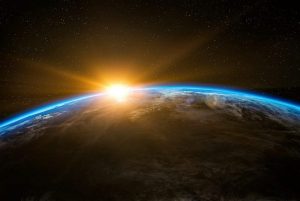
The origin of the geosphere dates back more than 4.5 billion years. The earth had been formed by a large group of shocks, dust, rocks and gases and the layers had been separated by gravity and cooling of the earth. Some scientists consider that the earth was created together with the solar system and that the earth at the beginning arose by the union of particles after the Big Bang, these unions could have been by homogeneous or heterogeneous accretion. It is considered that, at the beginning, it was a ball of melted materials and that by gravity, the densest materials sank forming the nucleus, and the lightest ones remained on the surface.
Geosphere characteristics
- The lithosphere is the part of the geosphere that was created by a series of geographic accidents.
- The part of the geosphere formed by rocks, minerals and soil is known as the pedosphere.
- It is composed of solid soil.
- It is in motion because it is the layer where we can find tectonic plates. These plates move and are responsible for making the different forms of relief rise, that earthquakes occur and that volcanoes erupt.
- The liquid rock or molten rock beneath the earth’s surface is part of the geosphere.
- It includes ocean floors, sand in deserts, rocks, mountains and every piece of land or formation on continents.
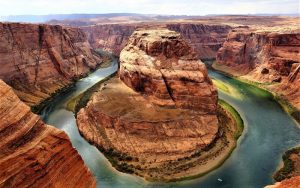
- Sedimentary rock in the geosphere is formed from erosion.
Layers
The layers of the geosphere are defined by their composition in the following ones:
- Crust: It is the rocky layer located on the surface of the earth that is in contact with the atmosphere, hydrosphere and biosphere. It is divided into oceanic and continental The oceanic crust forms the seabed and the continental crust gives shape to the continents.
- Mantle: It is a type of rock envelope which is rich in silica and is the intermediate layer. It is divided into upper mantle and middle layer and is in contact with the core.
- Nucleus: It is formed by an alloy of iron and nickel, including minor quantities of oxygen, silicon and sulfide.
According to physical properties, the geosphere is subdivided into: lithosphere, asthenosphere, mesosphere, outer core or endosphere and inner core.
Composition
It is composed of rocks and minerals, from molten rock to heavy metals. The geosphere also includes all the abiotic parts of the earth and the skeletons of animals that fossilize over time. Rock cycle processes, such as metamorphism, melting and solidification, weathering and erosion, are responsible for the constant recycling of rocks on Earth.
Dynamics
For a long time, scientists have sought ways to describe the different endogenous or tectonic processes that have been responsible for building the different reliefs using forces from within the planet. The dynamics of the geosphere can be internal or external. The internal one involves the movements of plates, volcanic activity and deformations. External dynamics involve external geological processes such as erosion, sedimentation and weathering, and external geological agents such as water and wind.
Natural phenomena in the geosphere
Different types of natural phenomena occur in the geosphere:
- Vulcanism or eruption of volcanoes
- Earthquakes which are earth movements that can be destructive.
- Erosion, sedimentation and weathering.
- Earth deformations.
Importance
The geosphere is very important for life on earth because it defines much of the environment in which we live, controls the mineral distribution, rocks and soils and generates natural phenomena that, although dangerous, are responsible for shaping the earth. The distribution of the mountains, the position of the continents, the shape of the bottom of the sea and the location of the main rivers and floodplains are largely products of the processes that occur in the geosphere. The distribution of mineral resources, such as oil, coal, metallic minerals, and even sand and gravel, are fundamental to the economic success of most nations.