About capitalism
Capitalism consists in the ownership of productive resources to be private, in other words, that these resources should belong to people and not an organization like the State. It considers that the market is the best mechanism to satisfy the needs of individuals and therefore believes that it is necessary to promote private property and competition.
Origin
Capitalism as an economic system emerged in the 13th century in Europe, replacing feudalism. It arose to propose labor for wages rather than for servitude or slavery.
Historians consider that the origin of capitalism came from the small trading towns of Europe. The road to capitalism in the 13th century gained strength thanks to the Renaissance and Reformation philosophy; movements that made the emergence of modern states easier.
Capitalism crisis
The crisis of the capitalist system began during the First World War at the moment when Russia left the system. As a consequence, there was a division between the systems and socialism began to develop, displacing capitalism. In the Second World War the second stage of the crisis took place, when Europe and Asia also came out of the system.
The crisis affected the economy and the state, including politics, ideology and the general life of societies. The main factors that generated the crisis were the rate of profits, the problems with underconsumption and the economic systems’ disproportions.
Characteristics
Among the most outstanding characteristics of capitalism we can mention the following:
- The owners control all the factors of production that exist.
- Their income derives from their property.
- They have the ability to operate their businesses very efficiently.
- It provides the necessary incentive to maximize profits. This incentive is the reason why many capitalists say greed is good.
- In corporations, the shareholders are the owners.
- Shareholders elect a board of directors and hire executives to manage the company.
- It takes a free market economy to succeed.
- It distributes goods and services according to the laws of supply and demand.
Principles
The basic principles of capitalism are as follows:
- The desire for profit: this is the basic principle of capitalism, the desire to obtain as much capital as possible.
- Private ownership and individual action: if the resources are in the hands of people who are not of the state, then they will work harder until they generate their own resources.
- Competition and survival of the fittest: competition is basic and new competitors are expected to emerge to generate competition.
- Supply and demand: individuals and companies work individually, but with coordinated actions to meet market needs.
Elements
There are four basic elements of capitalism: large-scale capital, the concentration of private property, fundamental workforce, and the proletariat.
Types of capitalism
There are several types of capitalism, among which we mention the following:
- Mercantilism and protectionism: a nationalist form characterized by the union of commercial interests through the State and imperialism.
- Free market capitalism: it is characterized by hiring volunteers without the intervention of third parties. Prices are established by supply and demand.
- Social economy of the market: the intervention of the State is minimal, but it provides security services, unemployment benefits and recognizes labor rights.
- Corporate capitalism: hierarchical and bureaucratic corporations have the upper hand.
- Mixed economy: it is based on the market and there is a relationship between private and public property in terms of the means of production and interventionism.
- Risk capitalism: it is considered as a society at risk and has a process of re-flexibility in which production systems are not centralized.
Stages
The stages of capitalism are:
- Commercial or mercantile capitalism: it occurred in the 15th and 18th centuries. It was known by the name of mercantilism. Portugal, Spain, Holland, England and France used this type of capitalism and explored new lands, conquered slaves, precious metals and other resources to become rich.
- Industrial capitalism: it occurred at the time of the Industrial Revolution.
- Financial capitalism: arose after the Second World War when companies exported means of production due to high competition and the growth of industry.
Causes
The causes of capitalism are several, the progressive collapse of feudal servitude, the small growth of agricultural incomes, peasant revolts, mainly in the Holy Roman Empire, now known as Germany, the migration of the nobility to the cities, the desire to unite the families of the bourgeois and noble classes.
Consequences
Capitalism affects the human being in his condition of life, the different problems of society such as unemployment, poverty and lack of education are some of these problems. It is a system based on social injustice and the poor distribution of wealth that has created dictatorships and different systems of oppression that are financed by foreign capital. The lack of work, the infant mortality rate and the discrimination of social groups are some of its consequences because capitalism always seeks the enrichment of a small group.
Advantages
Capitalism has the advantage that it produces the best products at the best prices. That’s because consumers will pay more for what they want more. Companies provide what customers want at higher prices and prices are kept low by competition between companies.
They make their production as efficient as possible to maximize profits. The most important thing for economic growth is the intrinsic reward of capitalism for innovation. This includes innovation in production methods which become more efficient just as new product innovation occurs.
Disadvantages
It’s not made for people who don’t have competitive skills. To maintain the functioning of society, capitalism requires government policies that value the family unit, however, it does not promote equal opportunities.
In the short term, inequality may seem like the best thing for capitalism’s winners because in this way they have fewer competitive threats. They may also use their power to manipulate the system by creating barriers to entry.
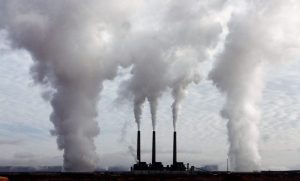
It ignores external costs, such as pollution and climate change, which makes everything cheaper. But over time, natural resources are depleted and the quality of life in affected areas decreases and costs to all increase.
Representatives of capitalism
Their main representatives are:
- Carlos Marx
- Adam Smith
- John Locke
- David Ricardo
- Thomas Malthus
Examples
Examples of capitalist countries include Austria, Germany, the Netherlands, Argentina, Canada, Brazil, Hong Kong, South Korea, Algeria, the United States and the Netherlands.