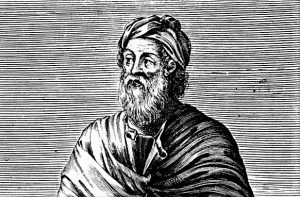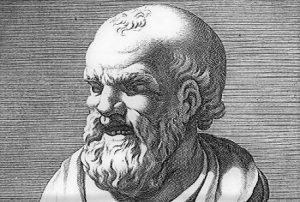
Arthur Schopenhauer biography
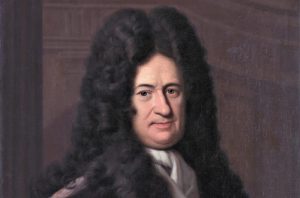
Arthur Schopenhauer was born in Danzig, Poland, on February 22, 1788. He was a descendant of two German families who had a lot of money. His parents moved to Hamburg after Prussia annexed Danzig in 1793. Schopenhauer’s father died in 1805, possibly as a result of suicide. Her mother, Johanna, was a writer and intellectual who started a literary salon in Weimar after her husband’s death.
Schopenhauer enrolled at the University of Göttingen in 1809 where she focused on studying philosophy, studying the ideas of Plato and Immanuel Kant. In 1819, Schopenhauer published The World as Will and Representation, a book that would establish his career as a philosopher. Later, he accepted a position at the University of Berlin, where he had rivalries with his lecturer Georg Wilhelm Friedrich Hegel who finally expelled him from the academic world.
This conflict affected Schopenhauer beyond his professional life. While living in Berlin, he was convicted of assaulting a woman named Caroline Marquet after she refused to leave his door and had to make payments to Marquet for the rest of his life.
In 1833, Schopenhauer moved to Frankfurt after a cholera outbreak in Berlin. He lived alone there for the next three decades, accompanied by poodles and cats. His writings on aging were published under the title Senilia. Arthur Schopenhauer died of heart failure on September 21, 1860, at the age of 72, in his home in Frankfurt.
Arthur Schopenhauer’s thought
Arthur Schopenhauer was one of the first philosophers to declare himself an atheist before the world and for this reason he was considered one of the most pessimistic in the history of philosophy. He thought that man was not only unhappy, but also that the only thing he could usually find was unhappiness. The essence that man had was the will, and the essence of this will was the tendency to a certain object, for this reason he thought that man was always in search of something and could never reach full satisfaction. For Schopenhauer there were three different things that could be done to alleviate unhappiness, to seek beauty, mercy to alleviate pain, and the exercises of asceticism to repress one’s will.
Ethics
His ethics were pessimistic and he closed himself to a behavior that guided us to have a certain way of acting and seeing life, so that, if there was a difficult situation we could not rescue the good part nor focus on seeing that situation in a positive way, then we would have a pessimistic behavior.
Vitalism and historicism
Vitalism and historicism emerged centuries ago as two currents of thought which were developed at the end of the 19th century. These two currents were characterized by force exaltation and by the importance they gave to the irrational instincts of life, since this constitutes the basic and fundamental reality that can explain other realities. Vitalism considered life from an individual point of view and historicism was more interested in the life of humanity in its passage through history.
Importance of Arthur Schopenhauer
The main importance that Schopenhauer had is that he introduced the antecedent to genealogical thought, which was quite developed during the nineteenth century with Nietzsche, Marx and Freud. His attacks against reason managed to remove the mask from a large number of dreams in the century of lights to give way to a new way of seeing and understanding the world.
His legacy can also be seen in 20th century literature which was greatly influenced by Schopenhauer’s ideas, and many of these authors have been awarded the Nobel Prize for their writings.
Works of Arthur Schopenhauer
His most important works were:
- Erotic dialectics or the art of being right: this work was exposed in 38 different stratagems and was a treatise based on the main themes that Aristotle
- The art of being happy: a book that explained 50 different rules for living, was never finished and was based on ideas that had the car based on a series of personal motivations where he conceives the idea of happiness as an impossible goal to achieve for human being, and sees it as a euphemism within the metaphysical pessimistic perspective.
- The world as will and representation: one of its main and elaborated manifestations of Schopenhauer’s pessimism and speaks to us of the limitation of knowledge that man has, of the subject, the object, space, time and chance.
- Parerga and paralipomena: it was his last work and in it he spoke of the aphorisms to obtain wisdom on how to live.
- On the fourfold root of the principle of sufficient reason: it was an essay on the classical principle of sufficient reason.
- On will in nature: focused on the natural world and the will that guides the behavior of organisms in their life cycle and the way this governs the behavior of the universe.
Phrases
Among its most important and recognized phrases we mention:
- Happiness is only the absence of pain.
- There are beings of whom it is not conceivable how they manage to walk on two legs, although that doesn’t mean much.
- Loneliness is the fate of all excellent spirits.
- Religions, like fireflies, need darkness to shine.
- There is no favorable wind for those who do not know which port they are going to.
- Life is only death deferred.
- Man has made the Earth a hell for animals.
- Each departure is an anticipation of death and each encounter an anticipation of resurrection.
- Vulgar men think only of how to spend time. An intelligent man tries to take advantage of it.
Curiosities
Some of Arthur Schopenhauer’s curiosities are as follows:
- He was despised by his mother since he was born.
- For Schopenhauer, love at first sight was nothing more than the instinct that tells us that with that particular person one can procreate a quality being for the next generation.
- When he went to lunch at a place known as Englischer Hof, Arthur Schopenhauer used to order two meals to make sure that no one sat next to him.
- When he died, he appeared on his couch and curiously, despite being so negative, he had a big smile on his face.