Arsenic characteristics
- It can be presented in three different solid forms.
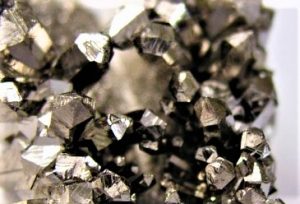
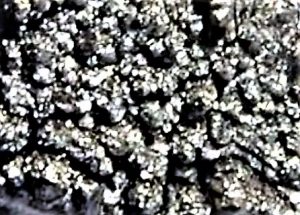
- Grey arsenic is the most common. It has a metallic luster and is capable of conducting electricity.
- Yellow is meta-stable, is a poor electrical conductor, and has no metallic sheen. It is prepared by cooling gray arsenic vapor in liquid air.
- Black is glassy, brittle, and has a poor electrical conductor.
- Name, symbol, atomic number are respectively: Arsenic, As, 33.
- Its atomic mass is 74,92160 u.
- The electronic configuration is [Ar]4s2 3d10 4p3.
- The density is 5727 kg/m3.
- Its electrical conductivity is 45 × 106 S/m and the thermal conductivity is 50 W/(Km.).
History
It is a natural element that has been known since ancient times as a sulfur compound. The Greek philosopher Aristotle, in the fourth century BC, referred to the element as “sandarach” and was later renamed as arsenic by his pupil Theophrastus of Eresos. The word comes from the Greek άρσενιχόν which has the meaning gold-pepper. It was also known in ancient Egypt and is mentioned in a papyrus as a way to give golden color to metals. The Chinese also knew about this element since it is reflected in the writings of Pen Ts’ao Kan-M who collected information in his great work on the natural world in 1500, during the Ming dynasty. He pointed out the toxicity associated with arsenic compounds and mentioned their use as pesticides in rice fields.
Who discovered the arsenic?
The first man to discover it was the German chemist Albert the Great in 1250. His name comes from the Greek words arsenikos which means male or the word arsenikon which was the Greek name for aural pigment, a mineral containing arsenic.
Properties
It is part of the elements of the periodic table called metalloids or semimetals. The type of properties presented by these elements are intermediate between metals and non-metals:
- It is a semiconductor of electricity and its state in natural form is solid.
- Its atomic number is 33.
- Its chemical symbol is As.
- The melting point is 887 degrees Kelvin or 614.85 degrees Celsius or degrees Celsius.
- Its boiling point is 1090 degrees Kelvin or 817.85 degrees Celsius or degrees Celsius.
What is it for?
Arsenic compounds are used in the manufacture of some special types of glass to preserve wood. It has become an important doping gas in the microchip industry, but its use requires strict guidelines regarding its use because it is extremely toxic. It strengthens the alloys between copper and lead for the manufacture of automotive batteries. It is used in pesticides, herbicides and insecticides, although its use is limited by its toxicity. It is used in medical treatments such as cancer and acute promyelocytic leukemia and in some medical solutions to combat psoriasis. In ancient times, it was also used in the creation of biological weapons during the First World War and the Vietnam War.
Foods containing arsenic
Some grape and apple juices because the water used to irrigate these fruit fields often contains high levels of arsenic. It can be found in some flours, bread, sweets, beer and pasta, products made from rice. Many times and although it seems incredible, water has arsenic levels harmful to health, canned fish and sardines, which accumulate arsenic, as well as clams, oysters and crustaceans.