Characteristics of antimony
Among its main characteristics we can mention the following:
- The symbol with which antimony is represented is the Sb.
- It is classified as a Nitrogenoids element of Group 15 of the Metalloids.
- Its Atomic number is 51.
- Its Atomic mass is 121,760
- The number of protons and electrons it has is 51.
- His neutron number is 71.
- Its electronic structure is as follows: [Kr] 4d10 5s2 5p3
- It has an electronegativity of just 2.05
- Its ionization energy (kJ.mol-1) is 834
- Its atomic radius is 141
- Its melting point is 630,63 C °.
- The boiling point is 1587 C °.
- Has a density (kg/m3) of 6691
- Its atomic volume (cm3/mol) is 18.20
- It has a crystalline structure and a rhombohedral shape.
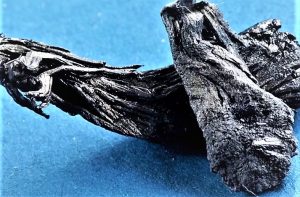
- It’s bluish-white.
History
Antimony and the compounds that formed it were widely known in ancient times; we can even find a jar made of antimony with more than 5,000 years in the Museum of the Louvre in Paris. Antimony sulfide (Sb2S3) is mentioned in a 16th century BC Egyptian people’s papyrus. The black form of this pigment, which occurs naturally as mineral stibine, was used as a mask and was once known as khol. The most famous historical figure who used this mineral was Jezebel, whose deeds are recorded in the Bible. During the 6th and 7th centuries BC, another pigment known to the Chaldean civilization emerged in what is now southern Iraq and was known as yellow lead antimonite. This mineral was also found in the enamel of bricks that decorated the town of Babylon and dates from the time of Nebuchadnezzar. It was widely used in medieval times, mainly to harden lead by its characteristics, although some were taken medicinally as a laxative pill.
Who discovered antimony
The antimony is a mineral of which ancestral data are available since it is even mentioned in the Old Testament, although possibly, the settlers of the epoch didn’t know it in metallic state, and it was confused with its Sulphur. There is no specific person who has discovered it, but its different properties were described around the year 1450 by the German alchemist Basil Valentine, who is considered as its discoverer.
Properties
- It has an electronegativity of 2.05.
- It is very stable when in air at room temperature but reacts with oxygen if heated to produce antimony trioxide.
- It is a silver-grey, glossy metalloid with a hardness on the Mohs scale of 3, which means it is too soft to make hard objects.
- It is resistant to acid attack.
- Four allotropes of antimony are known: one stable metallic form and three metastable forms.
- Elemental antimony is a shiny brittle, silvery, white metalloid.
- When cooled slowly, molten antimony can crystallize into a trigonal cell.
- A rare explosive form of antimony can be created from the electrolysis of antimony trichloride.
What is antimony for?
When found in its natural form it can be used in the manufacture of different semiconductor devices, in the creation of infrared detectors and diodes. It is widely used in the creation of different alloys with other metals such as lead, to achieve manufacture batteries, weapons, coatings for cables and different industrial products. It is an important component in soft solders that are melted at temperatures below 325 ° K. Its main function is to consolidate welding and suppress the formation of tin allotropes.