Definition of potable water
Potable water, in this context, is suitable water for human consumption.
History
Since the beginning of time, people have stored water in containers and pots, in the past, when man was a hunter and collector, the water used for drinking was from rivers, approximately 7000 years ago in Jericho, Israel, the water stored in wells, which began to be used as a water source, then they began to distribute water, through simple and practical channels dug in sand or rocks, later increased hollow pipes and then used ceramics, wood or metal.
Drinking water consumption
Drinking water can be consumed in many ways, is mostly used to treat supplies before cooking and is used in the kitchen in the same way when preparing food, plus people drink it alone.
Characteristics
The main characteristics of potable water are:
- It is filtered.
- It goes through a series of processes to become potable.
- It is suitable for human consumption.
- It is used mostly in agricultural plants, protecting plants from bacteria and diseases.
- It is tasteless.
- It is colorless.
What is it for?
This water goes through an extremely exhaustive sanitary treatment, which releases it from bacteria, toxins and radioactivity that could very well be harmful to a population’ s health; the function of water not only lies in that it can be ingested by people, but also with potable water, crops are irrigated in agricultural fields, in order to avoid and prevent crop contamination.
Where does drinking water come from?
- Wells.
- Springs.
Treatment
The water found in wells or springs to be ingested must be treated, however, this does not mean that the population of some cultures need to do so, since by tradition and custom, they take it directly from wells, springs or streams.
This process or treatment that is given to water is done in potable water plants, in which spring water or well goes through various changes and stages, to be able to achieve the final product that would convert it into potable water.
- Pre-chlorination and flocculation: After the water is processed by a filter, thus eliminating any trace of minerals or solid fragments of large objects, chlorine is added, eliminating water microorganisms, and other chemicals that also benefit the process, favoring the agglomeration of what would be defined as foci, whose name are flocs.
- Decanting: In this phase or stage, the flocs and other molecules and particles belonging to water are eliminated.
- Filtration: The water is passed simultaneously through filters that will gradually remove sand traces and particles or molecules that still exist in water, in turn, this process removes water turbidity.
- Chlorination and sending to the system: In this phase the microorganisms that resisted the previous processes are eliminated.
Since water is odorless, colorless and tasteless, it can be distinguished that it is already suitable for drinking, therefore, at this point, water is already drinkable.
Filters
- Filtration through deep bed: This is a filter that has gravel and sand inside, as the water passes through these layers, all the molecules are retained, further purifying the water.
- Filtration through activated carbon: After the water passes through mechanical filters, passes through the granular carbon purifier, many people tend to make the mistake of calling it the activated carbon filter, however, that is not its real name. In this filter, a chemical absorption process is generated, which generates that the microorganism particles that are still maintained in water, stick to the carbon walls; in this stage, the pesticides, toxins and other organic contaminants that are natural in the water take root.
- Cartridge filtration: This is the last stage of water filtration, it passes through a device which plays a filter role, which retains any residue that is still in water, manages to retain up to a residue of 22 microns, although the common in filters is 5 microns.
Distribution
All water distribution requires a highly organized infrastructure, to provide users with the vital liquid, these infrastructures are diverse and range from a complex system of pipes that facilitate the resource mobility, to containers or water tanks, therefore, the way in which it is distributed will cause a given price, the more complex the system, the greater the cost, however, since potable water cannot be stored in common containers because it can be contaminated.
Potable water shortage
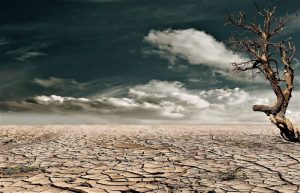
Potable water shortages have been proliferating throughout the world, thanks to the improper use of it, the irrational use of the vital liquid is costing its existence to many countries, so many of them have started to ration potable water; the liquid demands in recent years have risen greatly due to population growth and because a single person consumes approximately 300 liters of drinking water a day, which makes the situation more complex.
And although the scarcity of drinking water may be due to natural circumstances, the human being has cooperated to reduce the existence of water, not being aware when using it.
- This problem is affecting around 2800 million people on all continents.
- More than 1.3 billion people have no access to safe and potable water.
- It is estimated that approximately 70% of freshwater is used for agriculture.
- The problem of water scarcity is intensifying in countries such as China, India and sub-Saharan Africa.
- The African continent has the largest number of countries affected by water scarcity.
- Only 0.007% of the Earth’s water is potable.
- Millions of people must walk more than 12 kilometers a day to get clean water.
- The lack of drinking water causes the death of 4500 children per day.
- In China, more than 538 million people live in water stress.
- Economic scarcity of water is usually the main cause of water scarcity in most countries.
- One in five developing countries will have water scarcity problems by 2030.
- By 2025, 26 African countries are expected to face water shortages.
- 844 million people in the world lack a basic service of drinking water.
- 3 billion people in the world do not have access to basic sanitation installations.
Contamination
Contaminating the environment is simple, and it seems to be the hobby of most people, some wells and springs had to be treated, cleaned and closed to the population, since there were plastic residues or waste that should not be there, and that obviously are factors that pollute fresh water, which is why measures were taken, trellising the wells and springs, so that, unconsciousness does not affect the little fresh water reserve that remains in existence.
Ph of drinking water
The pH of drinking water must be between 6.5 and 9.5 in order to be considered safe.
Benefits
- Helps to preserve human health.
- It avoids diseases.
- Its pH is controlled, so it is regulated and adapted specifically for consumption.
Importance of potable water
Drinking potable water is one of the most vital resources needed in the world, not so much for coexistence, but also for people’s health, many people a year die from infections because of the lack of vital fluid, however, not many value having such an important resource at their disposal, the importance of drinking water is not only in these areas, also lies in the agricultural field, because it is used to ensure that crops are optimal and therefore, suffer less risk when consuming them.